Removes exposed iron contamination that can become initiation sites for rust staining on stainless steel.
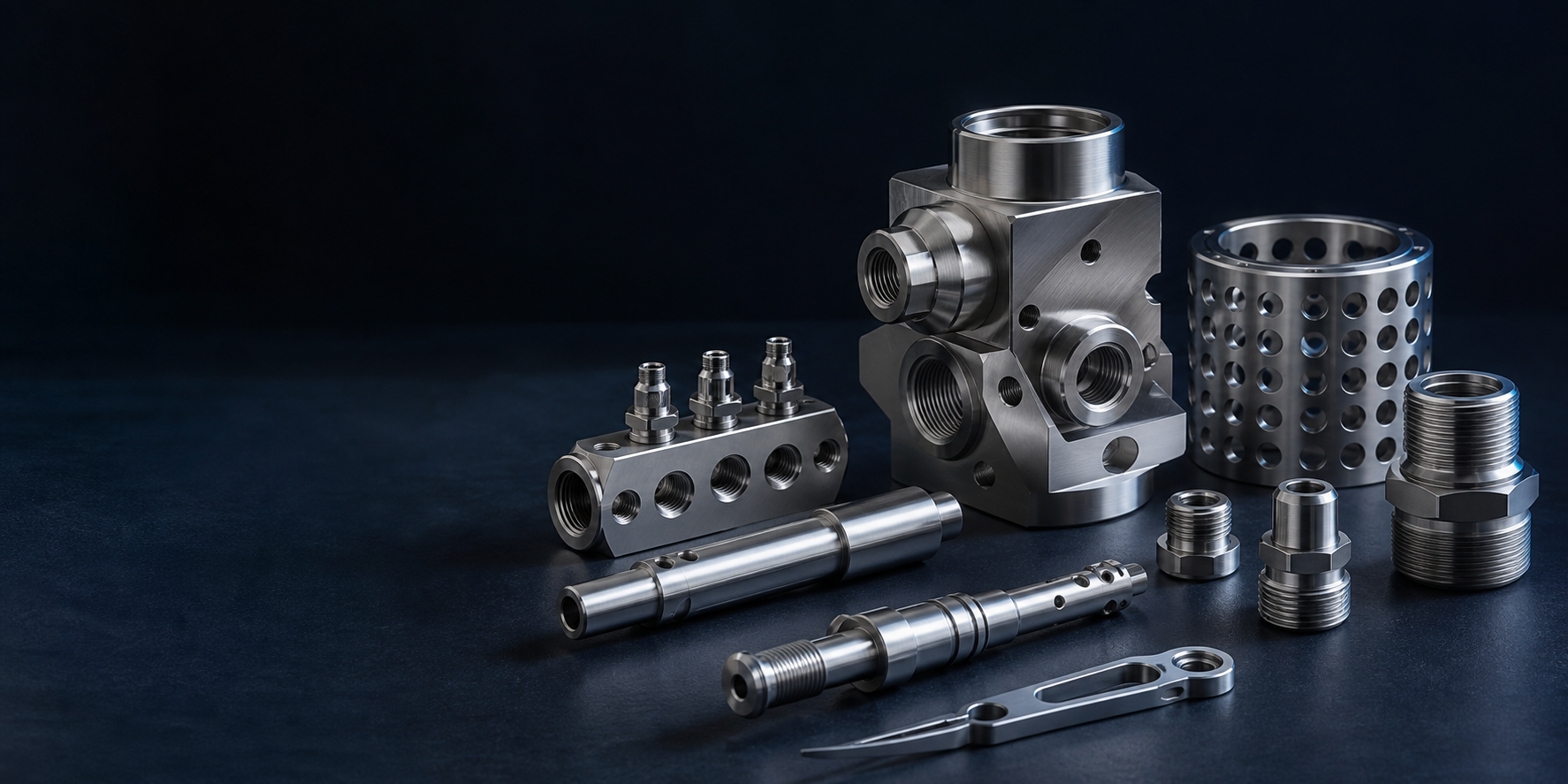
Clean stainless steel, verified free of surface iron
Passivation
Controlled cleaning and chemical treatment that removes exogenous iron from suitable stainless steel surfaces and supports formation of the alloy's naturally protective passive film.
What passivation actually does
Remove Contamination Without Adding a Decorative Coating
Stainless steel forms a thin chromium-rich passive film naturally in oxygen-containing environments when the surface is clean. Machining, grinding, handling, tooling, and fabrication can leave free iron or other contamination that interferes with that corrosion-resistant condition.
Passivation uses a specified nitric, citric, or electrochemical treatment to remove exogenous iron from a prepared stainless surface, followed by thorough rinsing and controlled drying. It normally retains the natural metallic appearance and adds no measurable coating build.
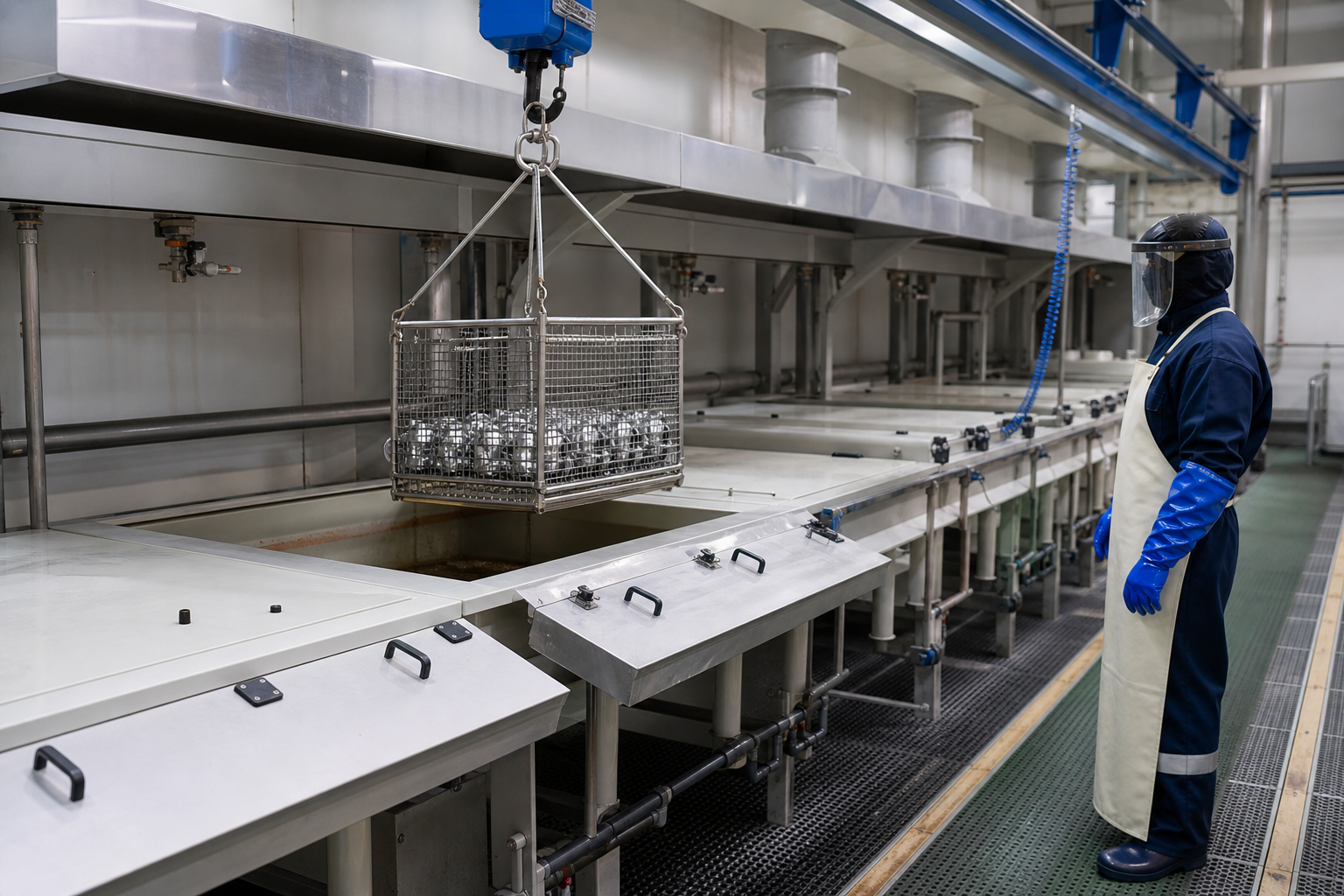
Supports the stainless alloy's passive condition when the correct grade, surface preparation, and service environment are used.
Unlike plating or paint, passivation does not intentionally deposit a measurable film over fits, threads, or sealing surfaces.
A controlled clean, rinse, and dry sequence helps remove residues that could contaminate products or later processes.
Treatment routes
Match the Method to the Alloy and Specification
Alloy family, sulfur content, heat treatment, surface condition, contamination, geometry, and acceptance test affect treatment selection.
Nitric Acid Passivation
A long-established oxidizing treatment with multiple concentration and temperature routes. Selection must suit the stainless grade and applicable specification.
Citric Acid Passivation
A chelating route that can effectively remove surface iron and may reduce some safety and environmental burdens, using a qualified material-specific cycle.
Electrochemical Treatment
Specified electrochemical processes can remove free iron while simultaneously refining the surface; this route should be distinguished from simple immersion passivation.
Pickling / Descaling
A separate, more aggressive preparation step used to remove heat tint, oxide scale, and chromium-depleted material before passivation when cleaning alone is insufficient.
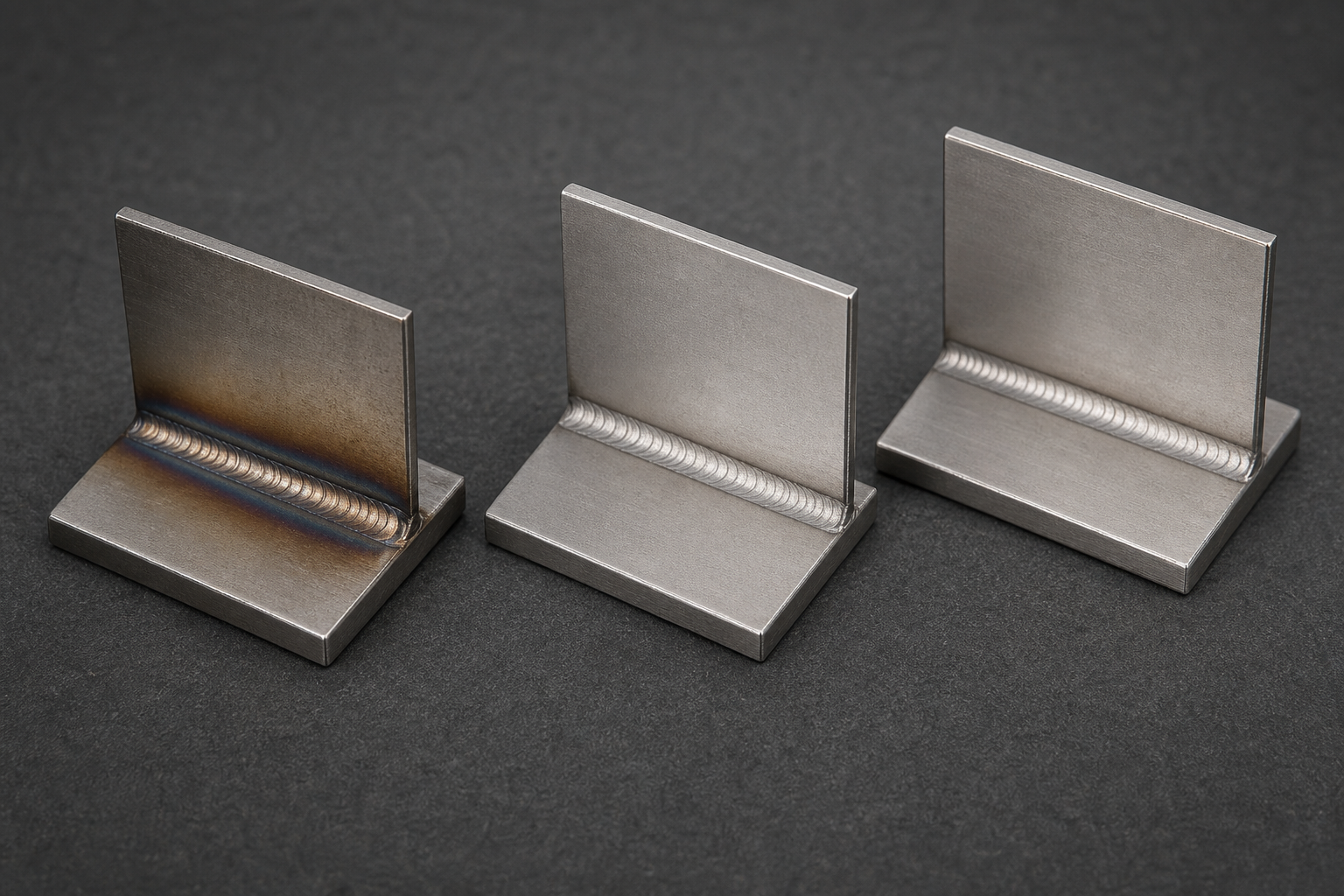
Clean · descale · passivate
Passivation Cannot Work Through Oil, Scale, or Heat Tint
Degreasing allows the treatment to contact the stainless surface. Heavy scale, embedded iron, and weld heat tint need appropriate mechanical cleaning or chemical pickling first. Passivation alone is not a universal descaling process.
- Use stainless-dedicated tools and handling equipment to limit carbon-steel transfer.
- Remove oils, chips, polishing compound, marking residue, and shop soil before acid treatment.
- Review welded areas for heat tint and inaccessible crevices that can trap cleaning solution.
- Protect clean parts from recontamination during rinsing, drying, inspection, and packing.
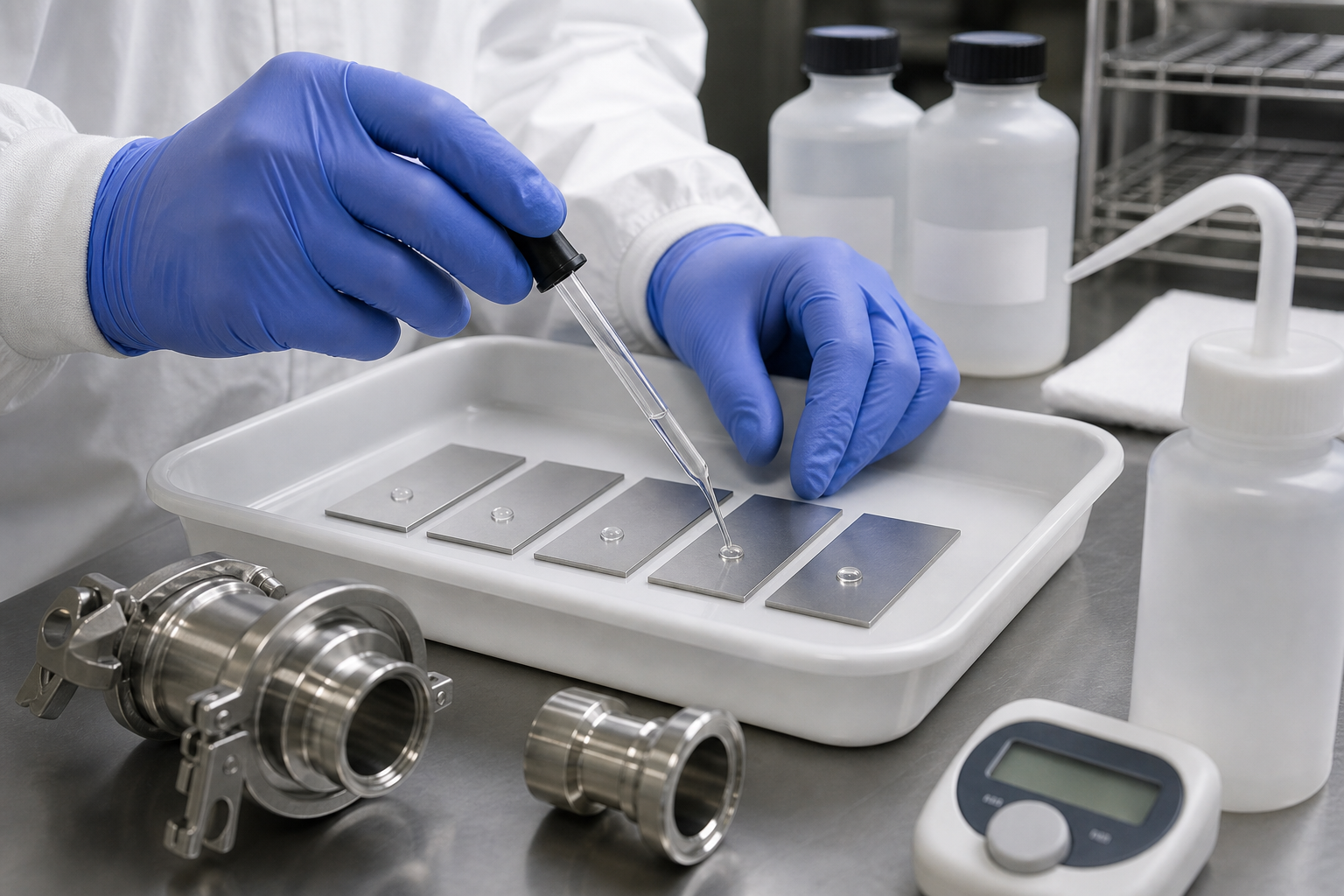
Acceptance testing
Verify the Process with the Test Named on the Drawing
Visual cleanliness alone may not reveal free iron. ASTM A967/A967M provides alternative qualitative tests such as water immersion, high humidity, salt spray, copper sulfate, potassium ferricyanide–nitric acid, damp cloth, and boiling-water immersion.
The selected test must be compatible with the alloy and end use. Test method, lot definition, sampling, timing, acceptance criteria, and any restrictions on test chemicals should be agreed before production.
Process comparison
Passivation, Pickling, Electropolishing, or Conversion Coating?
The word “passivation” is used loosely in industry. Naming the substrate, process, and standard prevents the wrong finish from being applied.
| Process | Primary purpose | Visible / dimensional effect |
|---|---|---|
| Stainless passivation | Remove free iron and support a clean passive stainless surface. | Normally retains the natural metal finish with negligible dimensional change. |
| Pickling / descaling | Remove oxide scale, heat tint, and affected surface material before final treatment. | Can etch or dull the surface and removes more base material than passivation. |
| Electropolishing | Electrochemically smooth and brighten the surface while removing material and contamination. | Reduces micro-peaks, can brighten the part, and creates a controlled material-removal allowance. |
| Chromate conversion | Form a conversion film on aluminum, zinc, or other specified substrates. | May be clear, iridescent, or colored; it is not stainless steel passivation under ASTM A967/A967M. |
Before production
Six Details to Put on the Drawing
Material Grade
State the exact stainless specification, condition, heat treatment, sulfur class, and material certification requirement.
Applicable Standard
Identify ASTM A967/A967M, ASTM A380/A380M, AMS 2700, or another required specification and revision.
Treatment Method
State nitric, citric, electrochemical, or supplier-selected route and any prohibited chemistry or grade-specific restriction.
Precleaning
Call out heat-tint removal, pickling, scale removal, weld cleaning, oil limits, or dedicated tooling where required.
Acceptance Test
Name the free-iron or corrosion test, lot size, sampling level, acceptance criteria, and restricted test chemicals.
Handling & Records
Define rinse-water quality, drying, cleanliness, packaging, traceability, and certificate or process-record needs.
Controlled chemical workflow
From Surface Review to Verified Release
- 01
Review & Segregate
Confirm alloy, condition, standard, treatment, test method, cleanliness, welded areas, and restrictions; prevent mixed-metal contamination.
- 02
Clean & Descale
Remove oils and residues; pickle or mechanically clean oxide and heat tint where the specified process requires it.
- 03
Passivate & Rinse
Control solution, concentration, temperature and time, then stop the reaction with thorough staged rinsing or neutralization as specified.
- 04
Dry, Test & Pack
Dry without recontamination, complete the required visual and free-iron test, document the lot, and use clean protective packaging.
Project questions
Passivation FAQ
Does passivation make stainless steel rust-proof?
No. It removes surface iron contamination and supports the alloy's passive condition, but corrosion performance still depends on grade, design, fabrication, surface condition, chloride exposure, temperature, crevices, cleaning, and service environment.
Does passivation change the part color?
Proper stainless passivation normally preserves the natural metallic appearance. A gold or strongly iridescent film generally indicates another conversion-coating process, not conventional stainless passivation.
Is passivation the same as pickling?
No. Pickling removes scale, heat tint, and affected surface metal. Passivation is a milder final treatment aimed primarily at removing free iron from a clean stainless surface.
Can every stainless grade use the same cycle?
No. Austenitic, ferritic, martensitic, precipitation-hardening, and free-machining grades can respond differently. The approved chemistry and acceptance test must be selected for the exact grade and specification.
Ready to define the treatment?
Send the Stainless Grade, Drawing, and Required Standard
We will review cleaning, descaling, nitric or citric route, rinsing, free-iron testing, traceability, and clean packaging with your manufacturing project.
Start Your Project