Suitable systems resist abrasion, impact, moisture, chemicals, and corrosion in their intended environment.
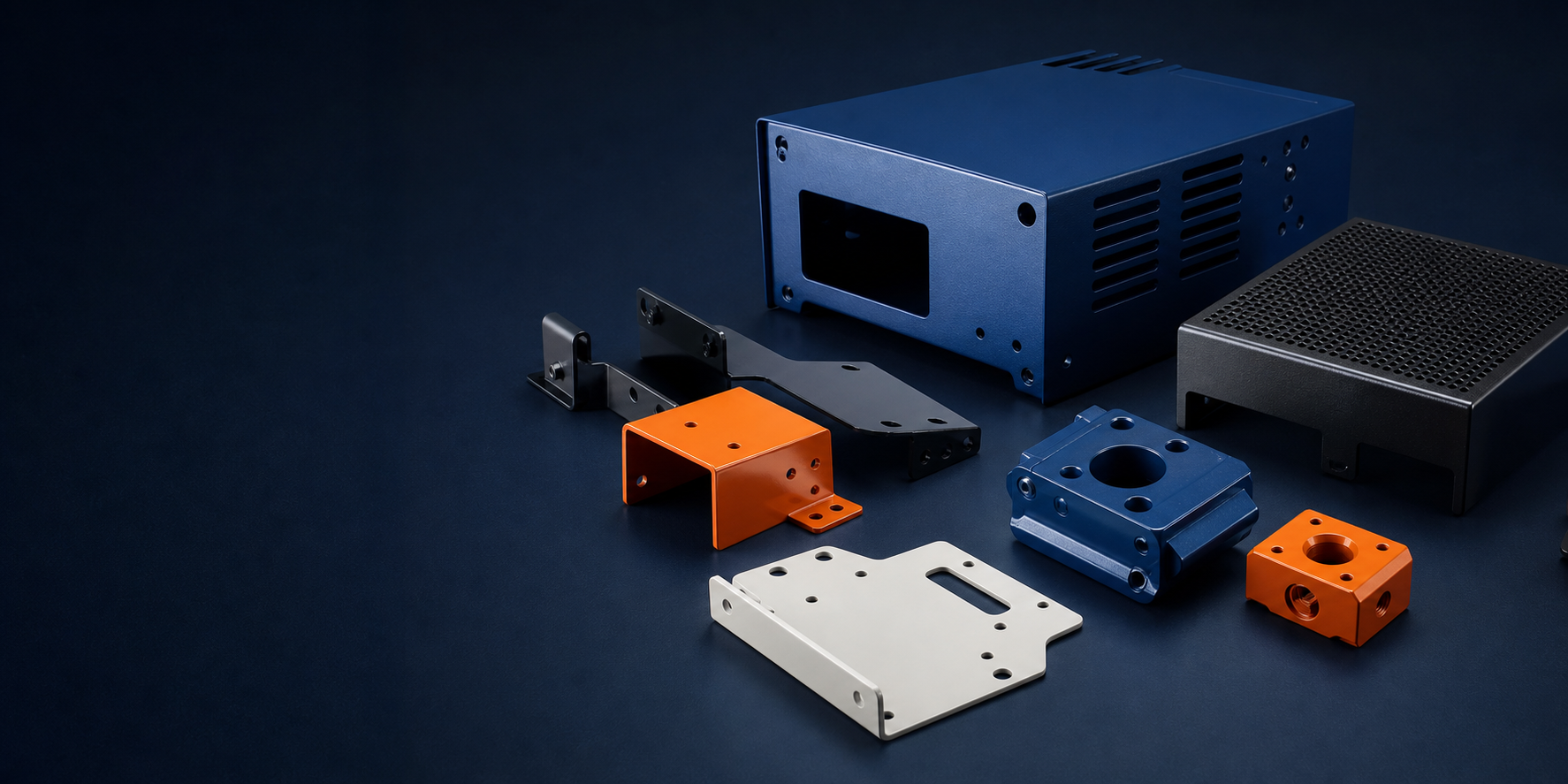
Durable dry-applied protective finish
Powder Coating
Tough, uniform finishes for precision metal parts, available in a wide range of colors, gloss levels, and textures with controlled pretreatment, masking, electrostatic application, curing, and inspection.
How powder coating works
Dry Powder Becomes a Continuous Protective Film
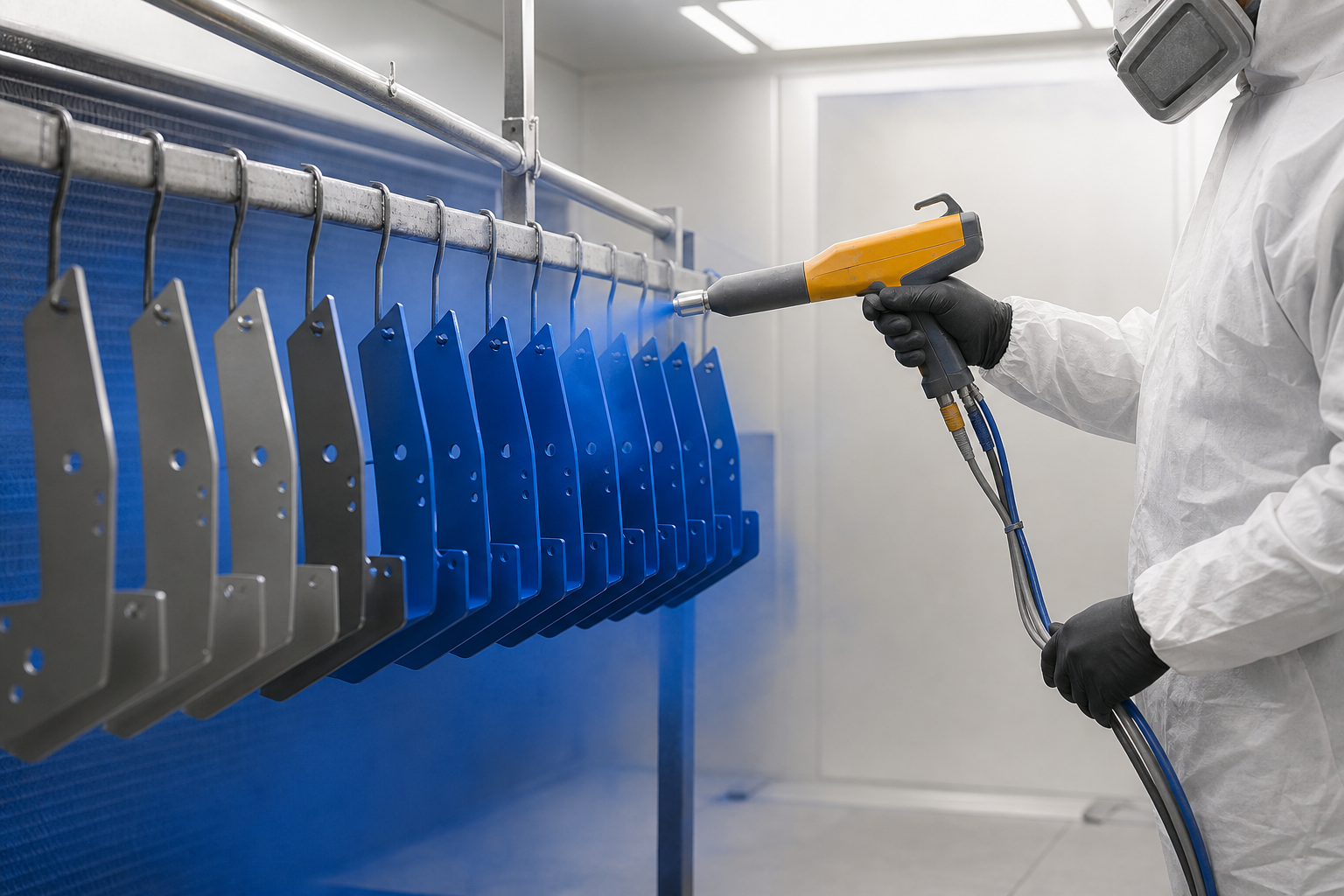
Powder coating uses finely ground resin, pigment, curing agents, and additives rather than a liquid paint carrier. The powder is typically electrostatically charged, attracted to a grounded metal part, and then heated so it melts, flows, and cures into a continuous coating.
Performance begins before the color is applied. Substrate cleaning, pretreatment, grounding, part geometry, film build, and the actual time at metal temperature all affect adhesion, coverage, corrosion resistance, and appearance.
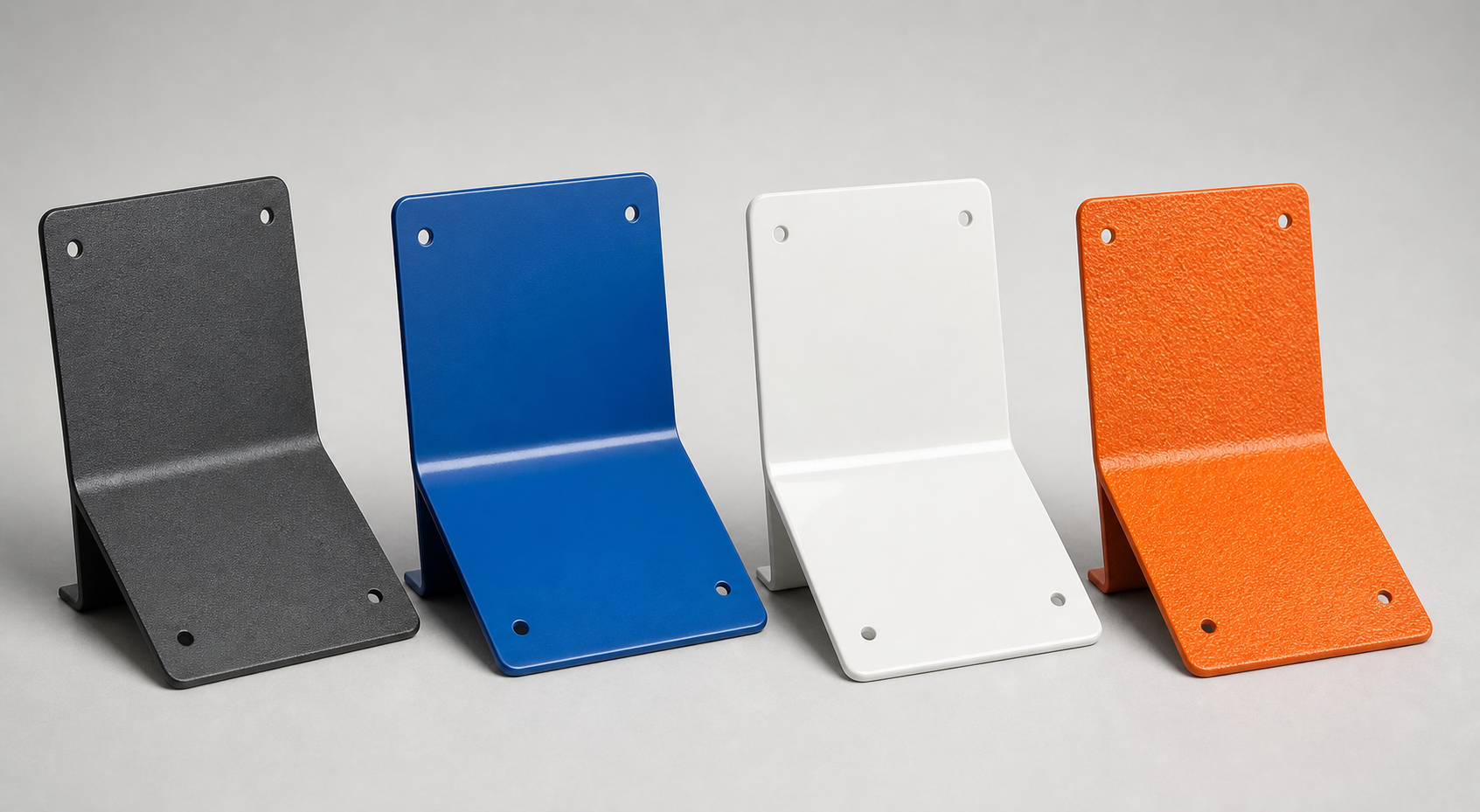
Matte, satin, gloss, fine texture, wrinkle, metallic, and other controlled appearances are available.
Electrostatic application supports repeatable film build across batches when grounding and geometry are controlled.
Conventional powder application does not require the solvent carrier used by liquid paint.
Coating chemistry
Select the Resin for the Service Environment
Color is only one part of the specification. Resin chemistry determines weatherability, chemical resistance, flexibility, appearance, and cure requirements.
Polyester
Common for general industrial and exterior products because suitable grades provide useful UV and weather resistance alongside color and texture options.
Epoxy
Selected for adhesion, chemical resistance, and corrosion protection in many indoor or primer applications; standard epoxies can chalk or fade under prolonged UV exposure.
Epoxy-Polyester Hybrid
Balances application behavior, appearance, and mechanical performance for many indoor enclosures, appliances, equipment, and fabricated parts.
Specialized Systems
Polyurethane, acrylic, high-temperature, low-cure, zinc-rich, insulating, conductive, and other formulations are reviewed against the exact requirement.
Appearance control
Color, Gloss, and Texture Need a Shared Standard
Powder coatings can be matched to common color systems or an approved physical sample. The final reading still depends on resin, pigment, texture, gloss, film thickness, cure, part geometry, and viewing light.
- Specify the color reference, gloss range, texture, and acceptable visual limits.
- Use production-equivalent samples for appearance-critical or metallic finishes.
- Define whether minor orange peel, edge variation, or rack marks are acceptable.
- Keep comparison samples and parts under consistent lighting and viewing conditions.
Functional design
Protect Fits, Threads, Contacts, and Sealing Faces
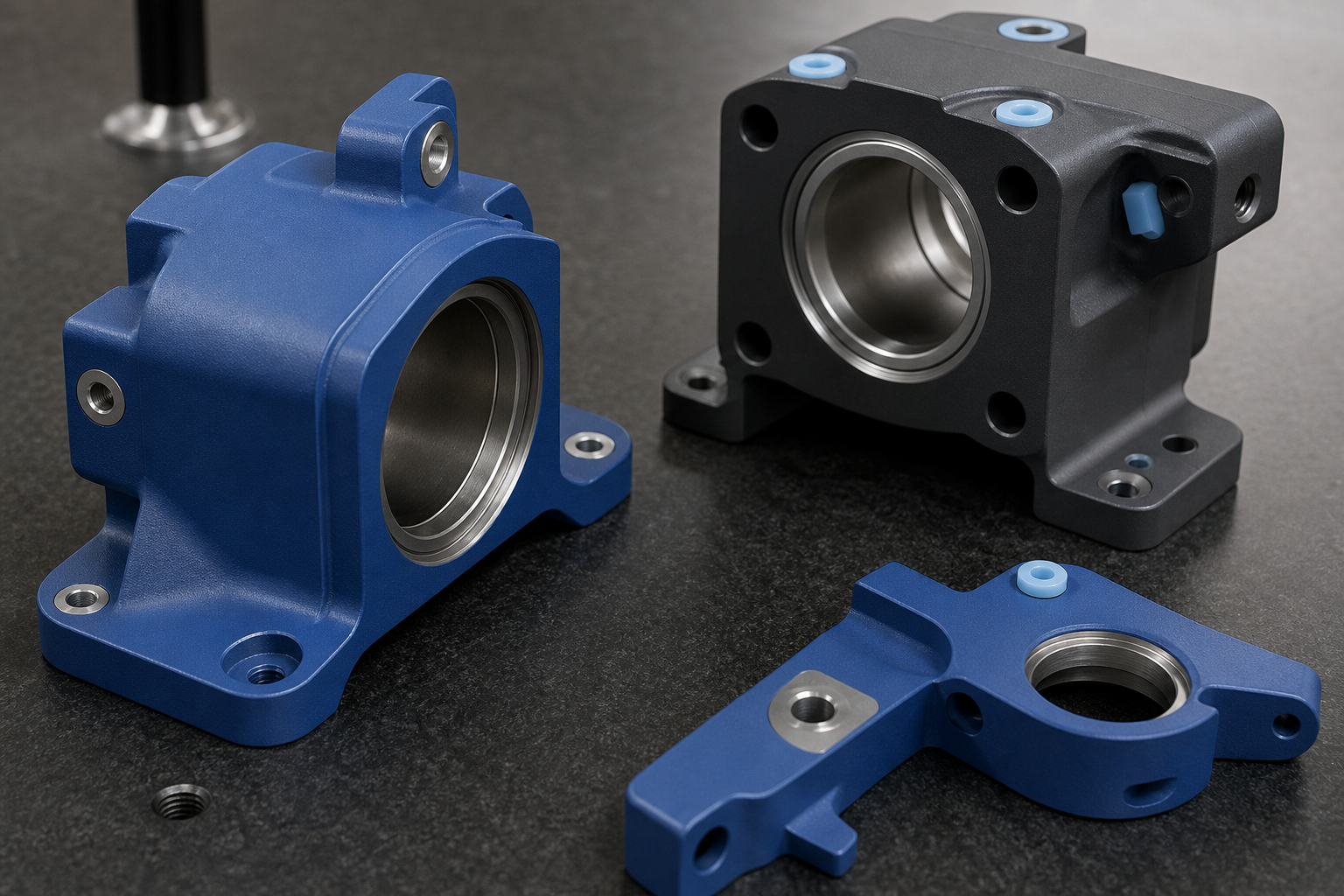
Powder coating is usually thicker than anodizing and can interfere with bearing seats, threads, electrical grounding points, gasket lands, mating faces, and tight assemblies. These areas should be dimensioned and marked for masking before the part is released.
Every part also needs a reliable hanging and grounding location. Rack contact should be placed where the resulting witness mark will not affect function or appearance.
Process comparison
Powder Coating or Liquid Paint?
Neither route is universally better. Geometry, substrate, heat tolerance, required film, appearance, repair strategy, quantity, and service exposure drive the choice.
| Requirement | Powder coating | Liquid paint |
|---|---|---|
| Application | Dry powder, commonly electrostatically deposited on grounded parts. | Liquid coating atomized or otherwise applied using the selected paint system. |
| Cure | Usually requires heat sufficient to achieve specified metal temperature and time. | May air dry, chemically cure, UV cure, or bake depending on the coating. |
| Film & edges | Typically a robust build; recesses and tight Faraday areas require process control. | Can provide thinner films and may be easier on some complex or heat-sensitive parts. |
| Appearance | Wide color, gloss, texture, metallic, and special-effect range. | Very broad chemistry and appearance options, including extremely smooth finishes. |
| Best fit | Durable metal enclosures, brackets, frames, equipment, and production batches. | Heat-sensitive substrates, special touch-up needs, very thin films, or paint-specific requirements. |
Before production
Six Details to Put on the Drawing
Coating System
State substrate, pretreatment, powder chemistry, primer if required, and applicable specification.
Color & Gloss
Provide the color reference, gloss range, texture, approved sample, and cosmetic classification.
Film Thickness
Define the required range and identify where thickness will be measured on the finished part.
Masking
Mark threads, fits, grounding points, gasket surfaces, and features that must remain coating-free.
Rack Location
Agree where the part can be hung and electrically grounded without affecting function or appearance.
Performance Tests
Specify adhesion, corrosion, impact, flexibility, abrasion, chemical, UV, or other required tests.
Controlled coating workflow
From Pretreatment to Protected Delivery
- 01
Review & Prepare
Confirm specification, substrate, finish, masking, rack location, and performance needs; clean and pretreat the part.
- 02
Mask & Ground
Protect functional features and establish secure hanging plus reliable electrical ground.
- 03
Apply & Cure
Deposit the powder with controlled film build, then achieve the specified time at metal temperature.
- 04
Inspect & Pack
Check appearance, coverage, thickness, cure, and specified tests before protective packaging.
Project questions
Powder Coating FAQ
Can powder coating cover every recess evenly?
Not automatically. Deep pockets, inside corners, channels, and closely spaced features can create Faraday-cage areas that need adjusted grounding, airflow, gun settings, orientation, or manual reinforcement.
Can threads be powder coated?
They can, but the film may change fit and interfere with assembly. Critical internal and external threads are normally identified for masking or given a defined coating allowance.
Is powder coating suitable outdoors?
Yes when the substrate preparation, coating chemistry, film build, cure, and color system are selected for the specified outdoor exposure. Standard indoor epoxy systems should not be assumed to have exterior UV durability.
What should I send for a quote?
Send the model and drawing with substrate, coating specification, color and gloss reference, film thickness, masking, cosmetic faces, rack restrictions, quantity, and required tests.
Ready to review your finish?
Send the Part, Color, and Coating Requirement
We will review chemistry, pretreatment, masking, film build, appearance, cure, and inspection with your manufacturing project.
Start Your Project