Reduce machining marks, tool lines, and selected surface irregularities through a planned abrasive progression.
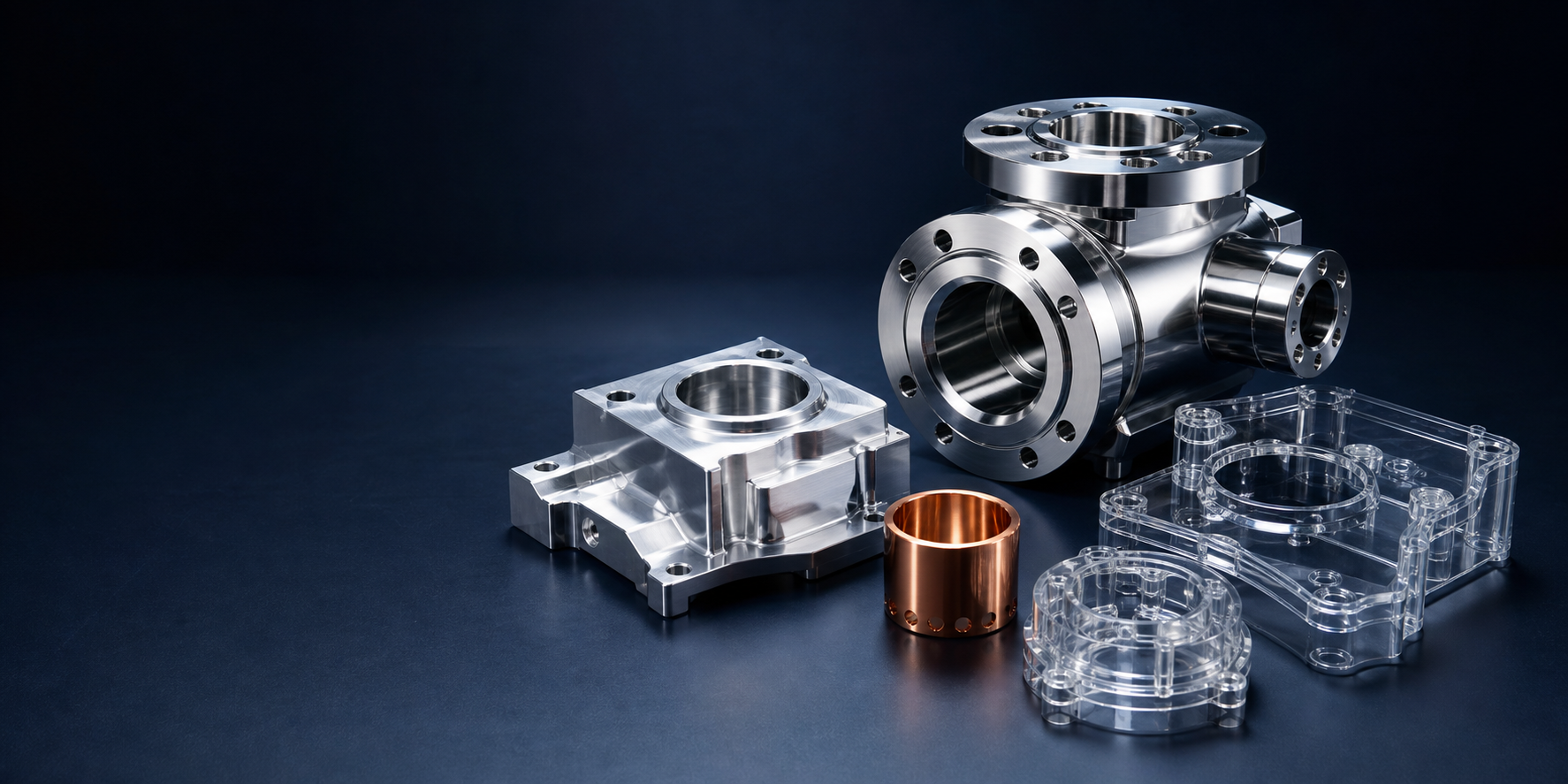
Controlled texture, reflectivity, and optical clarity
Polishing & Vapor Polishing
Mechanical refinement for metal surfaces and controlled smoothing for compatible plastics—specified around appearance, roughness, geometry, function, and repeatability.
Two finish families
Polishing Must Match the Material and the Surface Requirement
Metal polishing progressively removes or refines surface peaks with abrasives and buffing media. The sequence can create a directional satin finish, a bright decorative surface, or a near-mirror appearance, but each step also affects edges, geometry, and local material removal.
Vapor polishing or vapor smoothing uses a controlled chemical atmosphere to soften and redistribute only the outer surface of a compatible polymer. It is not a universal plastic treatment: resin chemistry, manufacturing process, wall thickness, trapped volumes, stress, and final-use requirements must be reviewed first.
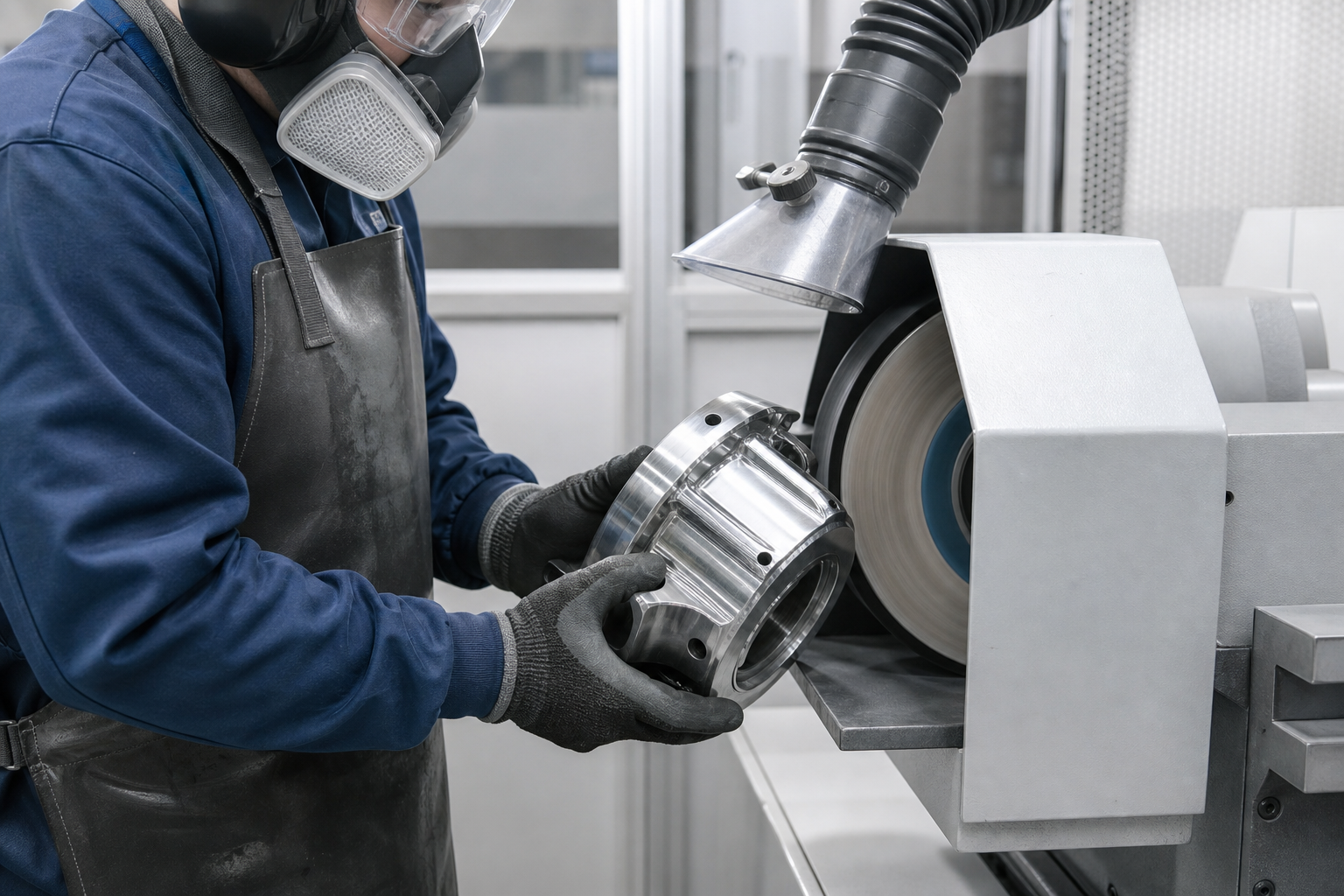
Define grain direction, reflectivity, gloss, and the visual standard rather than requesting “polished” alone.
A smoother, less irregular surface can be easier to clean when material, geometry, and service conditions are suitable.
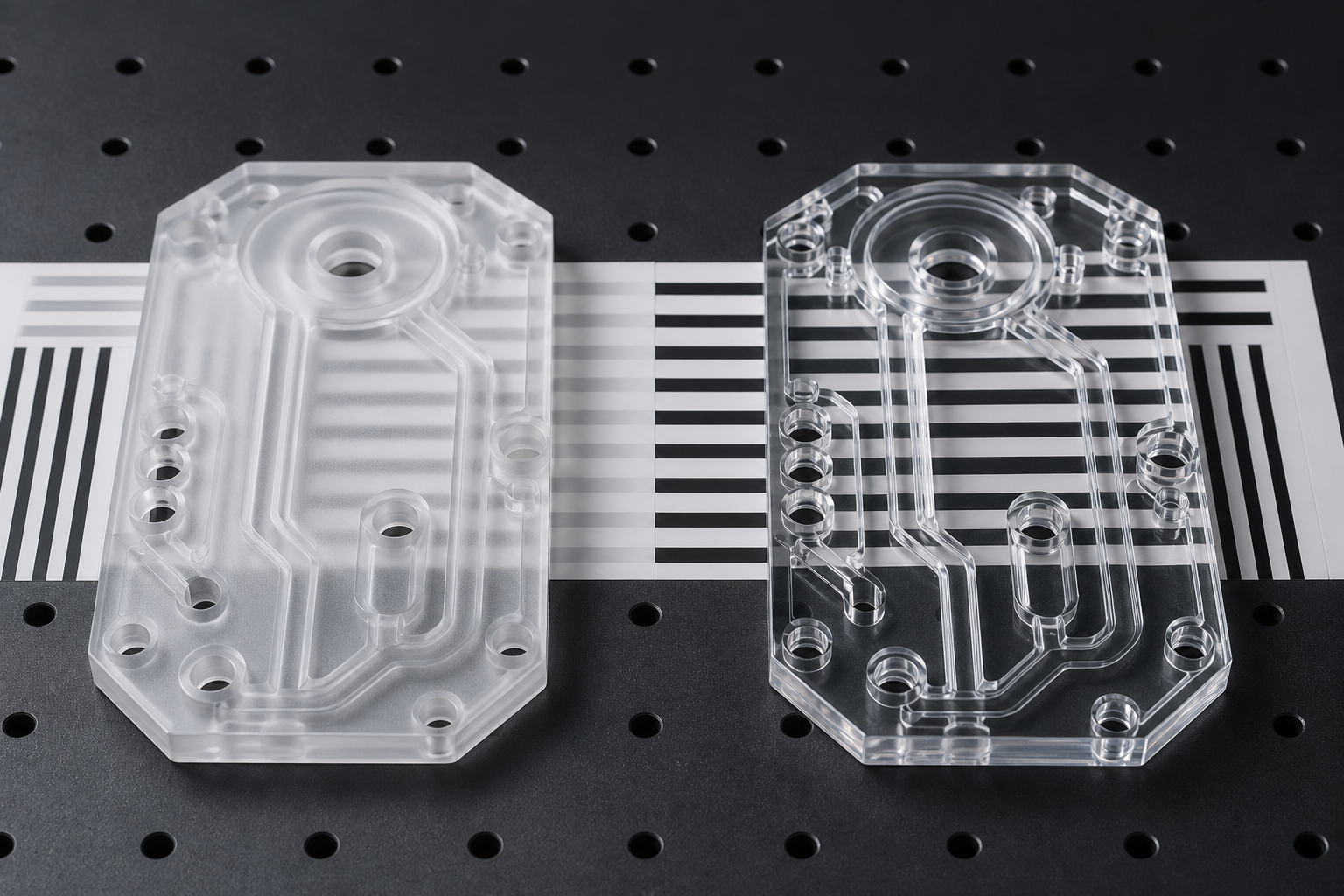
Compatible transparent plastics can gain clarity when tooling haze and micro-roughness are correctly refined.
Process selection
Four Routes with Different Capabilities
Part geometry, substrate, surface access, target roughness, cosmetic class, downstream coating, and quantity determine the practical route.
Manual Polishing
Hand tools, papers, films, compounds, and conformable media support localized work and complex contours, with operator skill central to consistency.
Mechanical Polishing
Belts, wheels, discs, and automated systems provide a staged abrasive cut for repeatable satin, bright, or mirror finishes on accessible metal surfaces.
Electropolishing
An electrochemical process preferentially levels metal micro-peaks and can reach some areas that are difficult to polish mechanically; alloy and process chemistry must be compatible.
Vapor Polishing / Smoothing
A controlled vapor interacts with a compatible polymer surface to reduce peaks and valleys, improve gloss or clarity, and help seal porous printed surfaces.
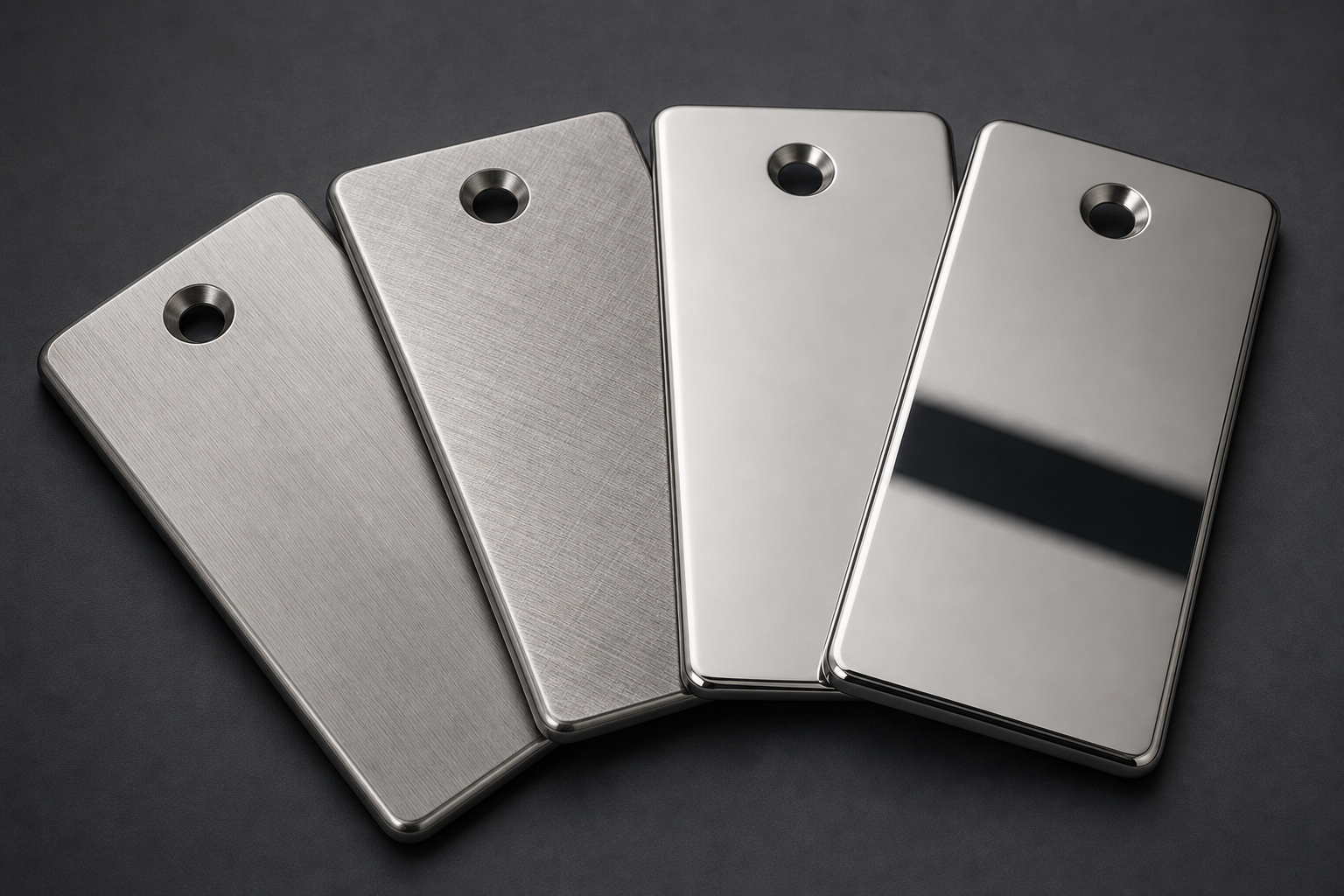
Metal finish definition
“Polished” Is Not a Complete Specification
Two parts can have similar roughness values and still look different because surface lay, residual lines, waviness, gloss, geometry, and viewing light all affect appearance. A finish sample and measurable criteria reduce ambiguity.
- State the required finish family: satin, bright, high-gloss, mirror, or a named industry reference.
- Define grain direction and whether blended transitions are permitted.
- Identify cosmetic faces, hidden faces, critical edges, and areas that cannot be touched.
- Use an approved production-equivalent sample for appearance-critical work.
Compatible plastics only
Vapor Treatment Smooths the Existing Surface—it Does Not Repair the Part
In a controlled chamber, vapor condenses or interacts at the polymer surface, temporarily softening it so fine peaks and valleys redistribute. This can reduce haze on selected clear machined plastics or smooth porous SLS and MJF surfaces when an approved material-specific process is available.
Deep cutter marks, printing defects, sink, cracks, distortion, poor transparency within the bulk material, and geometry errors remain. Sharp edges may soften, dimensions can change slightly, and enclosed volumes or tight channels require special review.
Process comparison
Mechanical, Electropolished, or Vapor-Smoothed?
These processes act differently and should not be substituted solely because all three can produce a smoother-looking surface.
| Process | How it changes the surface | Best fit and limits |
|---|---|---|
| Mechanical polishing | Physically cuts and refines the surface through progressively finer abrasives and buffing. | Accessible metal faces and contours; can round edges or create directional lines and local variation. |
| Electropolishing | Electrochemically removes a controlled amount of metal, preferentially leveling micro-peaks. | Compatible conductive alloys and complex surfaces; current density, racking, geometry, chemistry, and removal allowance matter. |
| Clear-plastic vapor polish | Uses compatible solvent vapor to reflow a very shallow polymer surface and reduce tooling haze. | Selected transparent thermoplastics after material and stress review; not suitable for every plastic or optical tolerance. |
| Printed-part vapor smoothing | Reduces powder-bed surface peaks and can close some open surface porosity. | Approved SLS/MJF materials and validated chamber processes; cannot erase pre-existing print defects or guarantee uniformity on every geometry. |
Before production
Six Details to Put on the Drawing
Exact Material
Provide alloy or polymer grade, color, manufacturing process, heat-treatment condition, and relevant certification.
Finish Standard
State surface roughness, gloss or clarity requirement, lay direction, visual class, and approved comparison sample.
Finished Dimensions
Define whether tolerances apply before or after polishing and identify stock or removal allowances.
Protected Features
Mark sealing lands, threads, bearing fits, sharp edges, datums, optical zones, channels, and surfaces that must remain untouched.
Defect Criteria
Agree limits for residual lines, pits, waviness, haze, flow marks, edge rounding, color variation, and handling marks.
Inspection Method
Specify measurement location, instrument, cutoff, gloss angle, optical test, lighting, viewing distance, sampling, and records.
Controlled finishing workflow
From Surface Review to Protected Packing
- 01
Review & Sample
Confirm material, starting surface, cosmetic zones, target finish, tolerances, access, and an approved reference when needed.
- 02
Prepare
Clean and protect critical features; establish abrasive sequence, fixture orientation, or a validated material-specific vapor cycle.
- 03
Refine & Stabilize
Polish in controlled stages or complete the chamber cycle, evacuation, drying, and conditioning required by the process.
- 04
Inspect & Pack
Verify finish, dimensions, clarity or gloss, cleanliness, and defects under agreed conditions before non-marring packaging.
Project questions
Polishing FAQ
Can polishing remove every machining mark?
Not without limits. Deep marks require more removal, which can affect flatness, edges, wall thickness, feature definition, and dimensions. The starting machining strategy should support the final finish.
Does a mirror finish guarantee a specific surface roughness?
No. Visual reflectivity and numerical roughness are related but not identical. Specify both when function and appearance matter, including measurement direction and location.
Can every plastic be vapor polished?
No. The polymer must be chemically compatible with a validated process. Additives, pigments, prior stress, assembly inserts, wall thickness, and end-use compliance can change suitability.
Will vapor polishing make a plastic part perfectly transparent?
It can improve clarity by reducing surface haze on suitable transparent material, but it cannot fix bulk haze, inclusions, internal stress, poor raw material, deep tool marks, or geometry that optically distorts the view.
Ready to define the finish?
Send the Material, Drawing, and Appearance Standard
We will review the process route, target roughness or clarity, critical dimensions, protected areas, samples, inspection, and production quantity.
Start Your Project