A stable oxide layer helps protect aluminum in suitable service environments.
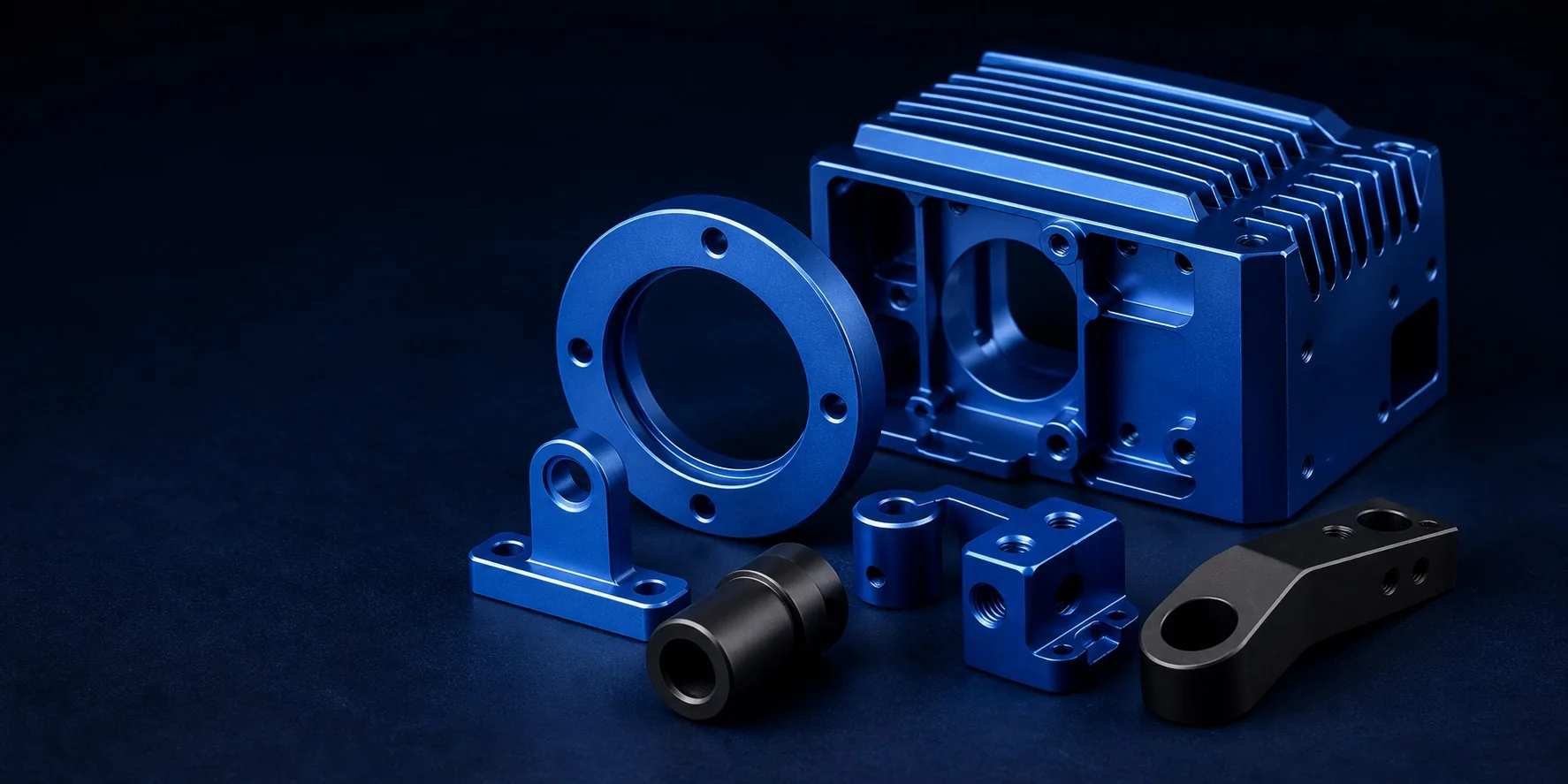
Electrochemical surface treatment
Anodizing for Custom Aluminum Parts
Controlled oxide finishes for aluminum components that need corrosion protection, wear resistance, electrical insulation, or a repeatable decorative appearance.
Project guide
What must an anodizing RFQ say about appearance and critical fits?
Define alloy, treatment, appearance reference, masking and final dimensions together. Agree cosmetic acceptance separately from any required performance tests.
What anodizing does
The Surface Becomes the Protective Layer
Anodizing is an electrolytic conversion process. Instead of applying a separate paint film, it grows a controlled aluminum-oxide layer from the component surface. The result is strongly bonded to the base metal and can be sealed, dyed, or left in a natural finish.
The correct result depends on the aluminum alloy, surface preparation, oxide type and thickness, sealing route, color target, and the areas that must remain conductive or dimensionally unchanged.
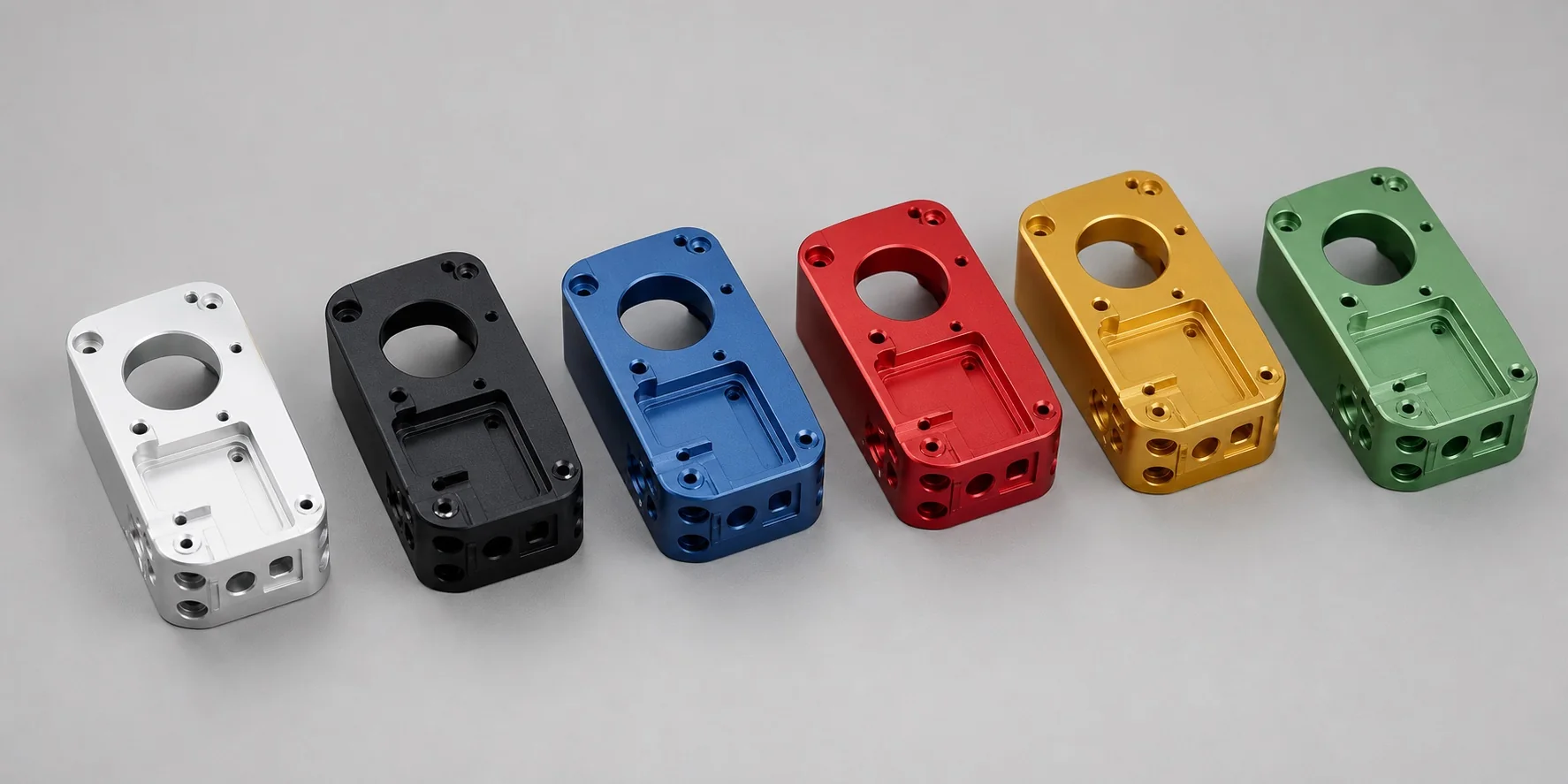
Hardcoat routes provide a denser surface for sliding, handling, and mechanical use.
Clear, black, and dyed colors can be paired with blasting, brushing, or polishing.
The oxide is non-conductive, so grounding faces and threads may require masking.
Process selection
Anodizing Routes to Discuss
Specify the required standard or functional result on the drawing. We review the route against alloy, tolerance, appearance, and end use.
Decorative Anodizing
Commonly used where corrosion resistance and appearance matter. Clear, black, and colored finishes are available, with satin, matte, or brighter results determined largely by the pretreatment.
Hardcoat Anodizing
A thicker, denser oxide for improved abrasion and wear resistance. Natural hardcoat color can vary from gray to dark charcoal depending on alloy and thickness.
Thick-Film Anodizing
A build selected for demanding wear, insulation, or corrosion needs. Because dimensional change is significant, fits, bores, and threads must be reviewed before machining is released.
Micro-Arc Oxidation
Also called plasma electrolytic oxidation, this route creates a ceramic-like oxide on suitable aluminum, magnesium, or titanium alloys for high hardness, insulation, and thermal stability.
Functional performance
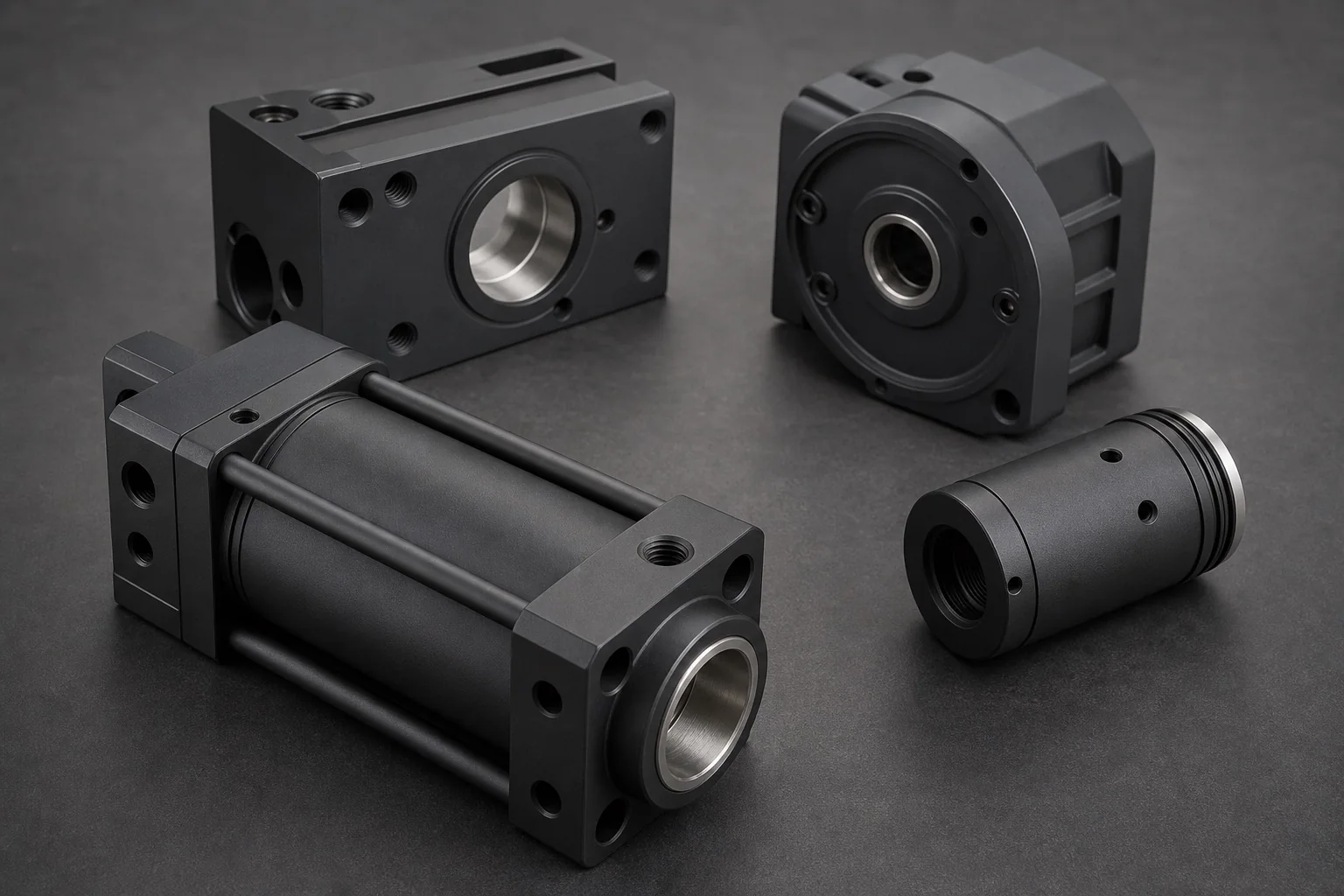
Hardcoat Needs Dimensional Planning
Hard anodizing changes only the surface layer; it does not harden the aluminum core. Part of the oxide grows inward and part builds outward, so coating allowance matters on precision diameters, sealing faces, sliding fits, and threaded features.
- Identify wear surfaces, critical fits, and coating-free contact points.
- Define thickness and any post-finish dimensional requirement on the drawing.
- Review whether sealing improves corrosion resistance or conflicts with tribology.
- Expect natural shade variation between alloy grades, lots, and heavy film builds.
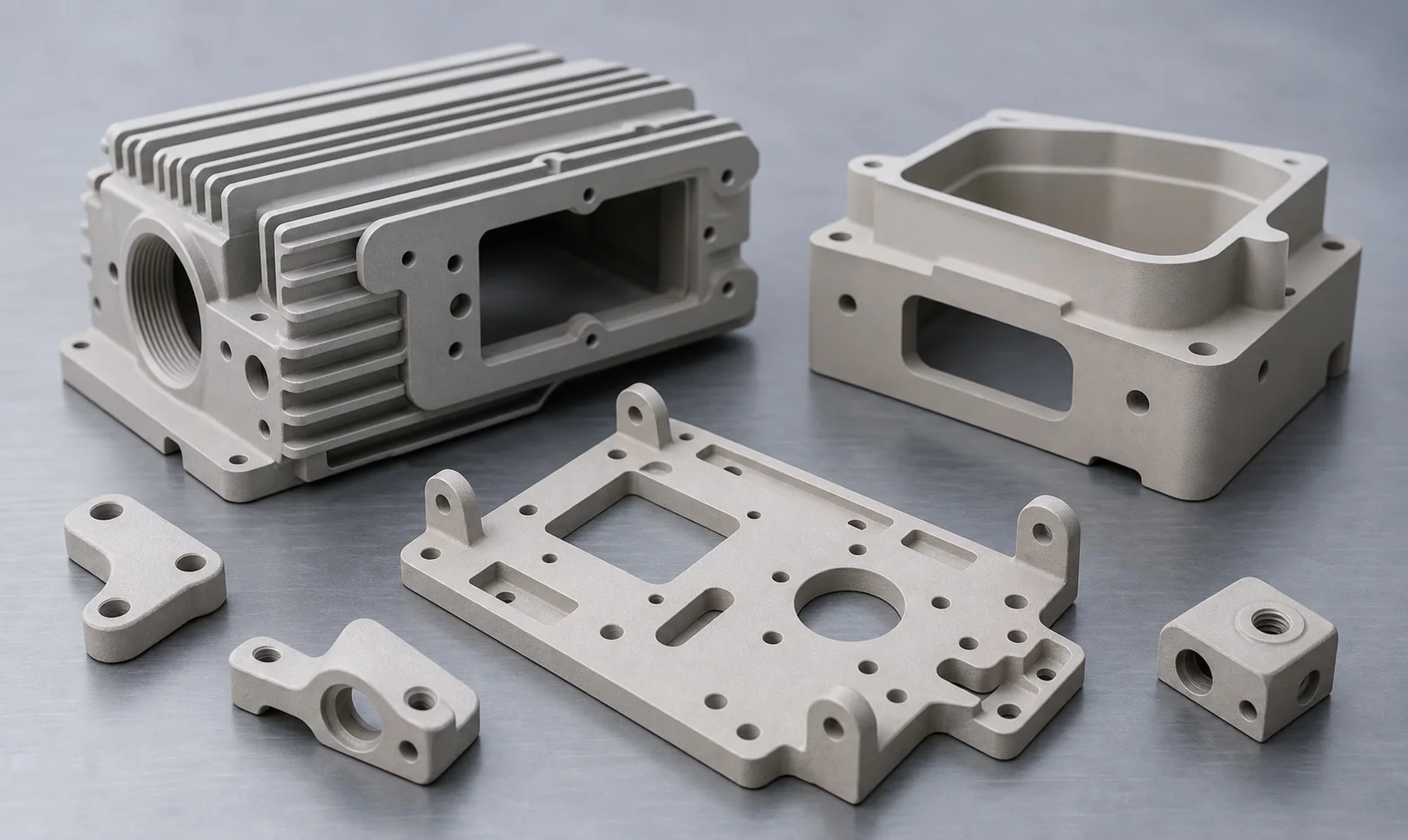
Ceramic-like oxide
When Micro-Arc Oxidation Fits
Micro-arc oxidation uses higher-energy electrical discharge than conventional anodizing to form a hard, adherent ceramic-like layer. It is considered for magnesium and aluminum parts that need a stronger combination of wear, corrosion, electrical insulation, and heat resistance.
Its surface is usually matte and may be rougher than decorative anodizing. The required alloy, thickness, porosity control, sealing, and post-processing should be agreed before production.
Material response
Alloy Choice Affects the Finish
Anodized color and uniformity are not controlled by dye alone. Copper, silicon, zinc, and other alloying elements change the oxide response. Sample approval is recommended for appearance-critical parts.
| Specific aluminum grades | Typical anodizing behavior |
|---|---|
| 1050 / 1060 / 1100 | Commercially pure grades generally produce clear, bright, and uniform decorative finishes. |
| 5005 / 5052 | Both respond well. 5005 is preferred for consistent decorative sheet finishes; thicker coatings on 5052 can develop a slight yellow tint. |
| 6061 / 6063 / 6082 | 6061 is a reliable machining and hardcoat choice; 6063 gives cleaner cosmetic results. 6082 can be anodized functionally but may appear less uniform. |
| 2024 / 7075 | High-strength grades can anodize darker or less uniformly because of their alloy content. Sample approval is recommended for visible parts. |
| A356 / A380 cast aluminum | High silicon content can create gray or mottled surfaces. Special pretreatment is normally required, and cosmetic color matching is limited. |
Decision guide
Agree appearance and final dimensions together
An anodizing request should identify the alloy and specified treatment, then distinguish cosmetic acceptance from functional acceptance. A color name does not define the complete finish, and a pre-finish dimension does not define the final fit.
Scroll horizontally to compare all columns.
| Requirement | Specify in the RFQ | Confirm before processing |
|---|---|---|
| Alloy and treatment | Material grade, required process or specification, thickness and sealing requirements | Compatibility with the actual alloy and service conditions; route availability for the project |
| Appearance | Cosmetic faces, pretreatment, color reference and approved sample when required | Acceptable variation and the viewing or sample comparison conditions |
| Fits and contacts | Post-finish dimensions, threads, sealing lands and conductive areas | Masking boundaries and the machining or finishing allowance for the specified process |
| Handling and acceptance | Permitted rack-contact area, required tests and packaging needs | Inspection stage, reporting scope and who approves the reference sample |
Do not assume an appearance sample proves corrosion or wear performance. If either is required, specify the applicable acceptance test and supporting records. Confirm coating allowance for the actual treatment rather than using a universal thickness rule.
Guide updated . Confirm the manufacturing and inspection scope for your actual order.
Controlled finishing workflow
From Drawing Review to Protected Delivery
-
01
Review
Confirm alloy, specification, thickness, color, texture, masking, and inspection needs.
-
02
Prepare
Clean and pretreat the surface; protect features that must remain coating-free.
-
03
Anodize & Seal
Grow the oxide layer, dye when specified, then seal or apply the agreed finishing route.
-
04
Inspect & Pack
Check appearance and specified requirements, then protect finished surfaces for shipment.
Project questions
Anodizing FAQ
Can anodizing match an exact color?
A target sample or color range is more realistic than treating anodized metal like paint. Alloy, surface texture, thickness, dye bath, sealing, and viewing light can all shift the result.
Can threaded holes be anodized?
Yes, but oxide growth can tighten the fit and the surface becomes non-conductive. Critical threads are often masked or machined with a defined coating allowance.
Does hard anodizing make the whole part harder?
No. It creates a hard surface oxide; the mechanical properties of the aluminum core remain those of the selected alloy and heat treatment.
Which files should I send for a quote?
Send the 3D model and a 2D drawing showing alloy, finish specification, color or sample, critical dimensions, masked areas, cosmetic faces, and quantity.
Ready to review your finish?
Send the Alloy, Drawing, and Anodizing Requirement
We will review the functional surfaces, appearance target, dimensional allowances, and inspection needs with your machining project.
Start Your Project