Qualified pretreatment plus E-coat creates a durable primer system for steel and other validated conductive substrates.
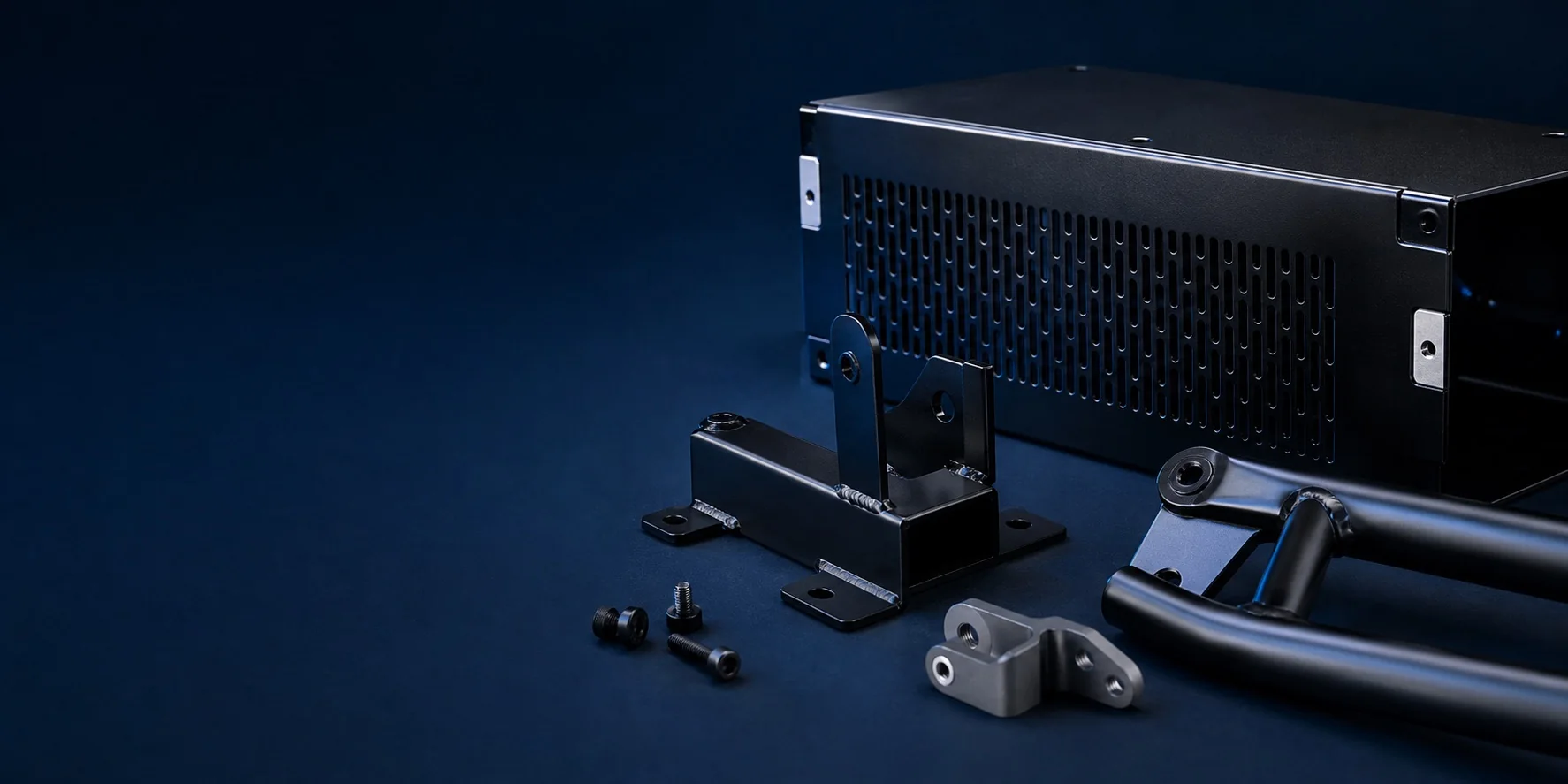
Immersion coverage with controlled film build
Electrophoretic Coating (E-Coat)
Waterborne paint particles deposited by direct current onto conductive metal parts—selected as a corrosion-resistant primer or a qualified final finish for complex components.
Project guide
What should an e-coat review cover?
E-coat planning should consider the conductive substrate, access for coating, drainage, contact points and subsequent assembly. Recessed features need their own acceptance requirements.
How E-coat works
Electrical Charge Deposits Paint from an Immersion Bath
A conductive part is cleaned, pretreated, electrically connected, and immersed in a waterborne coating bath. Direct current attracts oppositely charged resin and pigment particles to the metal, creating a continuous film on electrically accessible surfaces.
As the deposit builds, it becomes electrically insulating and the deposition rate slows. This self-limiting behavior supports controlled coverage, but geometry, voltage, bath condition, rack contact, air release, drainage, and cure still determine the final result.
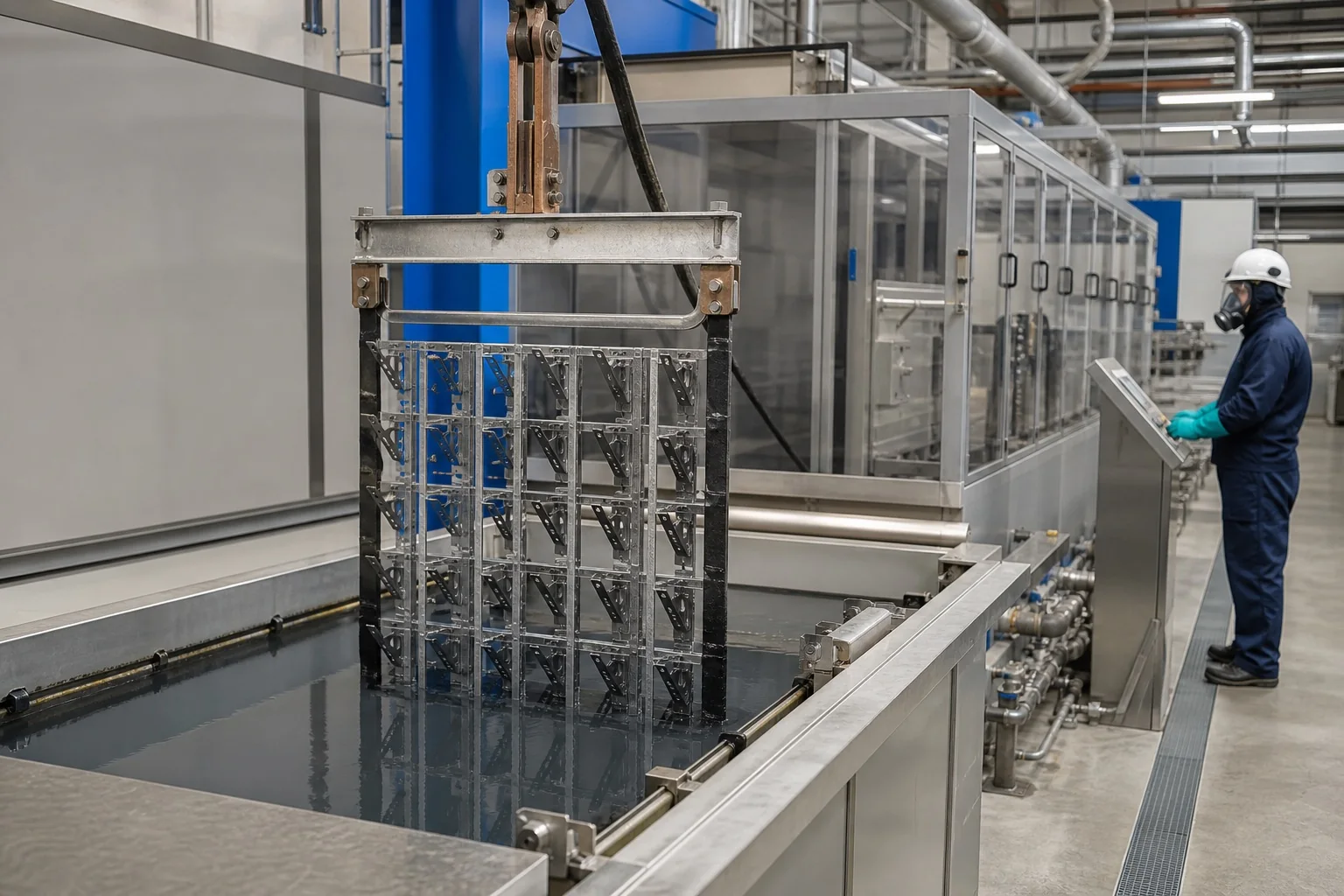
Full immersion and useful throwpower can reach accessible recesses, edges, weldments, and internal surfaces.
Electrical process control and self-limiting deposition help produce consistent film without liquid-paint runs or sags.
Post-rinse and ultrafiltration can recover drag-out coating and support a highly controlled closed-loop process.
System selection
Choose the Chemistry and Coating Stack for the Service Environment
E-coat is not one universal black finish. Polarity, resin chemistry, pretreatment, cure window, color, UV exposure, topcoat compatibility, and corrosion requirement must be selected together.
Cathodic Epoxy
A widely used primer route for corrosion resistance, adhesion, chemical durability, and compatibility with many liquid or powder topcoats. Exterior UV exposure normally calls for a suitable topcoat.
Cathodic Acrylic
Available for qualified one-coat or topcoat applications where appearance and UV resistance are important. Color and performance depend on the specific material system.
Anodic E-Coat
The workpiece is the anode rather than the cathode. Anodic systems remain useful for selected primers, decorative applications, substrates, and lower-temperature cure requirements.
E-Coat + Topcoat
E-coat can serve as the uniform corrosion-resistant foundation beneath powder or liquid paint when color range, weathering, texture, or added barrier performance is needed.
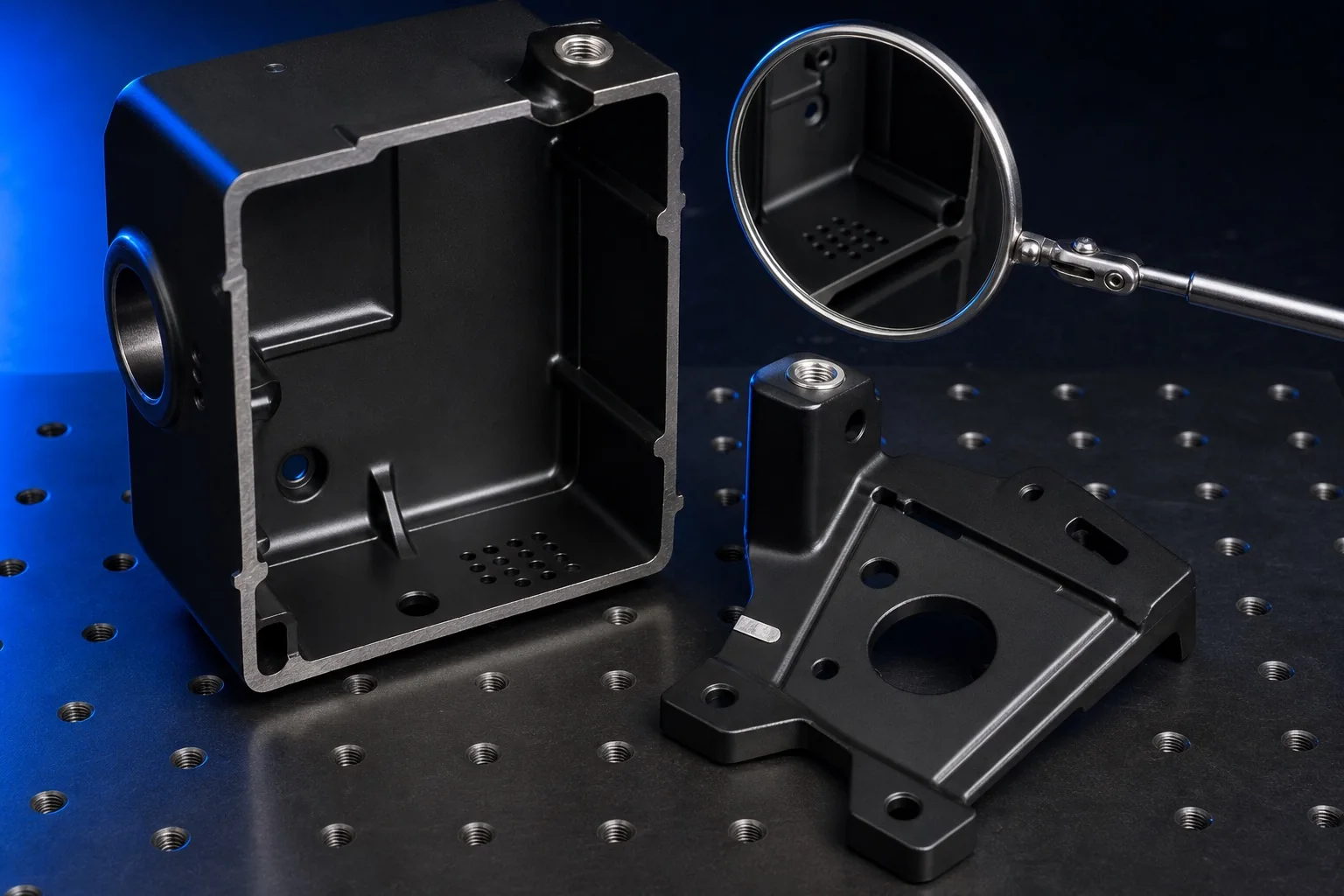
Coverage starts with part design
Throwpower Helps—but Sealed and Air-Locked Areas Still Cannot Coat
E-coat can cover complex electrically accessible shapes more effectively than line-of-sight spray processes. It cannot displace trapped air, drain through a sealed cavity, or deposit where the electrical path and bath exchange are inadequate.
- Add vent holes at high points and drain holes at low points in the coating orientation.
- Avoid liquid traps, overlapping seams, sealed tubes, and narrow gaps that cannot rinse or drain.
- Provide a reliable uncoated rack-contact location with enough current capacity.
- Mask threads, grounds, weld zones, sealing faces, and tight fits when coating is not permitted.
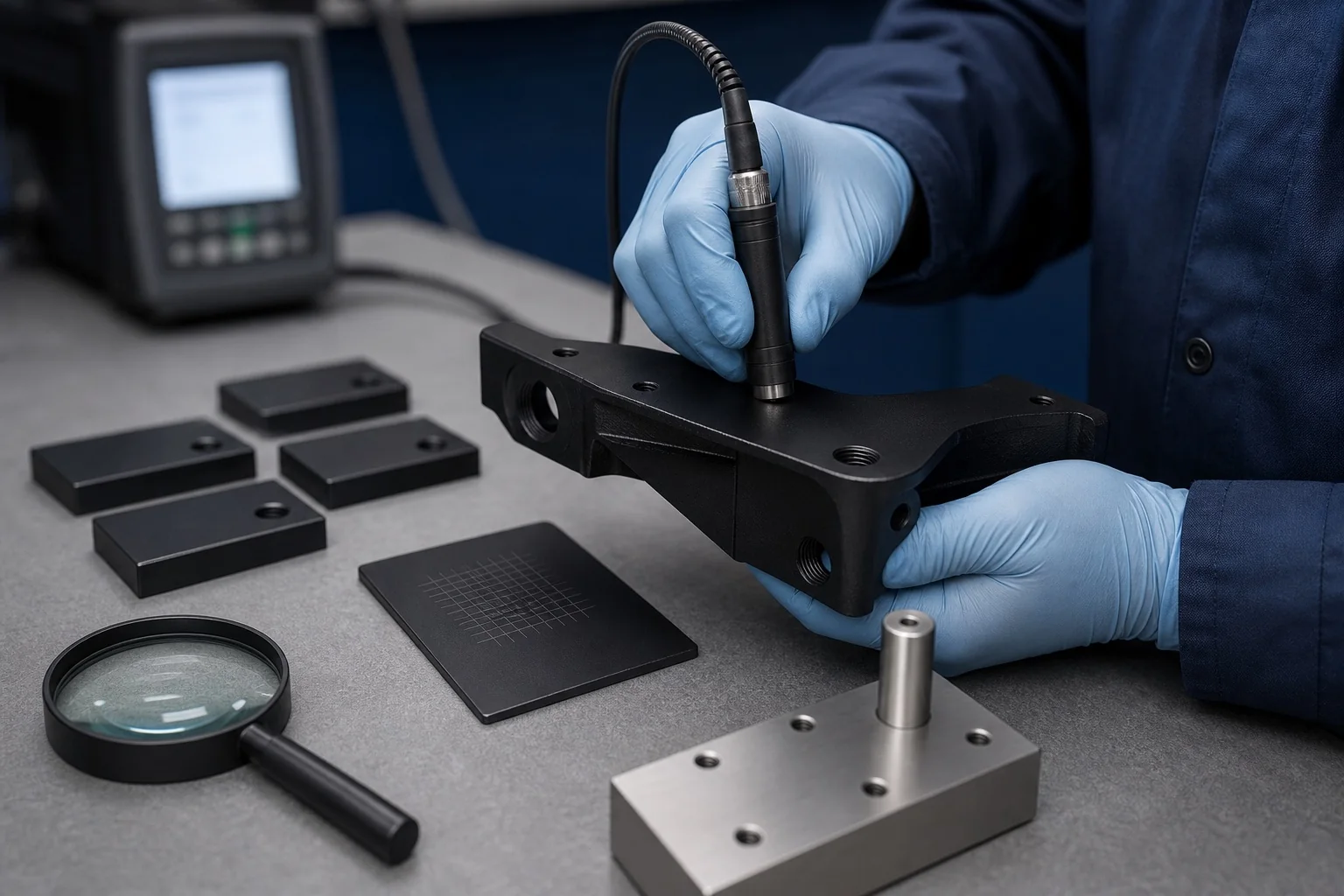
Verify the complete system
Film Thickness Alone Does Not Prove Performance
Inspection may include thickness, cure, adhesion, appearance, coverage, dimensions, contamination, and corrosion testing. The method and acceptance criteria should match the substrate, coating system, drawing, and intended exposure.
Voltage, immersion time, bath temperature, solids, conductivity, pH, part geometry, rack loading, pretreatment, rinsing, and metal temperature during bake all affect the finished coating.
Process comparison
E-Coat, Electroplating, Powder, or Liquid Paint?
All four can protect or decorate metal, but they deposit different materials and create different design constraints.
| Process | What is deposited | Key implication |
|---|---|---|
| E-Coat | Waterborne organic resin and pigment by electrical deposition and bake cure. | Strong immersion coverage on conductive parts; needs rack contact, drainage, rinsing, and oven cure. |
| Electroplating | A metallic layer reduced from metal ions by electrical current. | Provides metallic properties; thickness follows current density and geometry. |
| Powder Coating | Electrostatically sprayed dry polymer powder, then melted and cured. | Usually thicker with broad color and texture options; recessed coverage and fits need planning. |
| Liquid Paint | Atomized or otherwise applied liquid coating that dries or cures. | Flexible color and chemistry choices; spray coverage, runs, overspray, flash, and cure must be controlled. |
Before production
Six Details to Define on the Drawing
Substrate & Pretreatment
State the exact alloy, heat treatment, weld condition, scale or oil condition, and the approved cleaning and conversion pretreatment.
System & Color
Specify cathodic or anodic system, epoxy or acrylic chemistry, primer or final-coat use, color, gloss, and approved reference sample.
Film & Dimensions
Define nominal range, minimum and maximum thickness, significant surfaces, measurement points, and finished fit allowances.
Vents & Drains
Show the coating orientation and ensure every cavity can fill, release air, rinse, and drain without retaining process liquid.
Masking & Contact
Mark threads, bores, seal faces, grounds, weld areas, electrical interfaces, and permitted rack-contact witness locations.
Tests & Exposure
Define adhesion, cure, appearance, corrosion, chemical or UV requirements, sampling plan, topcoat, packing, and service environment.
Controlled E-coat workflow
From Clean Metal to Cured, Inspected Film
- 01
Review & Pretreat
Confirm substrate, system, orientation, masking, film, cure, and tests; remove oil and scale, rinse, and apply the qualified pretreatment.
- 02
Rack & Electrodeposit
Establish reliable contact, immerse without trapped air, and control voltage, time, bath chemistry, temperature, agitation, and loading.
- 03
Post-Rinse & Cure
Recover drag-out through controlled rinsing, drain the component, and bake until the specified part-metal temperature and cure are achieved.
- 04
Inspect & Protect
Verify coverage, film, cure, adhesion, dimensions, appearance, and required performance before clean non-marring packaging.
Project questions
Electrophoretic Coating FAQ
Is E-coat the same as electroplating?
No. Both use an electrical field and require a conductive workpiece, but E-coat deposits an organic paint film that is baked, while electroplating deposits metal from metal ions.
Will E-coat cover every internal cavity?
No. It offers useful throwpower on accessible, conductive surfaces, but coverage depends on opening size, electrical field, bath exchange, orientation, venting, drainage, and rack design. Sealed or air-locked regions cannot be reliably coated.
Can E-coat be the final visible finish?
Yes, with a system qualified for the appearance and exposure. Cathodic epoxy is commonly used as a primer and may need a UV-resistant topcoat outdoors; acrylic systems can support selected final-coat applications.
Which parts can be E-coated?
The normal process requires a conductive metal substrate and reliable electrical contact. Steel is common; aluminum, zinc, stainless, and mixed-metal assemblies require substrate-specific pretreatment and process validation. Nonconductive plastic is not directly E-coated by the standard route.
Ready to define the E-coat system?
Send the Substrate, Drawing, and Exposure Requirement
We will review chemistry, pretreatment, film build, venting and drainage, masking, rack contact, cure, topcoat compatibility, inspection, and production quantity.
Start Your Project