Hardening and tempering can balance load capacity, hardness, ductility, and resistance to brittle failure.
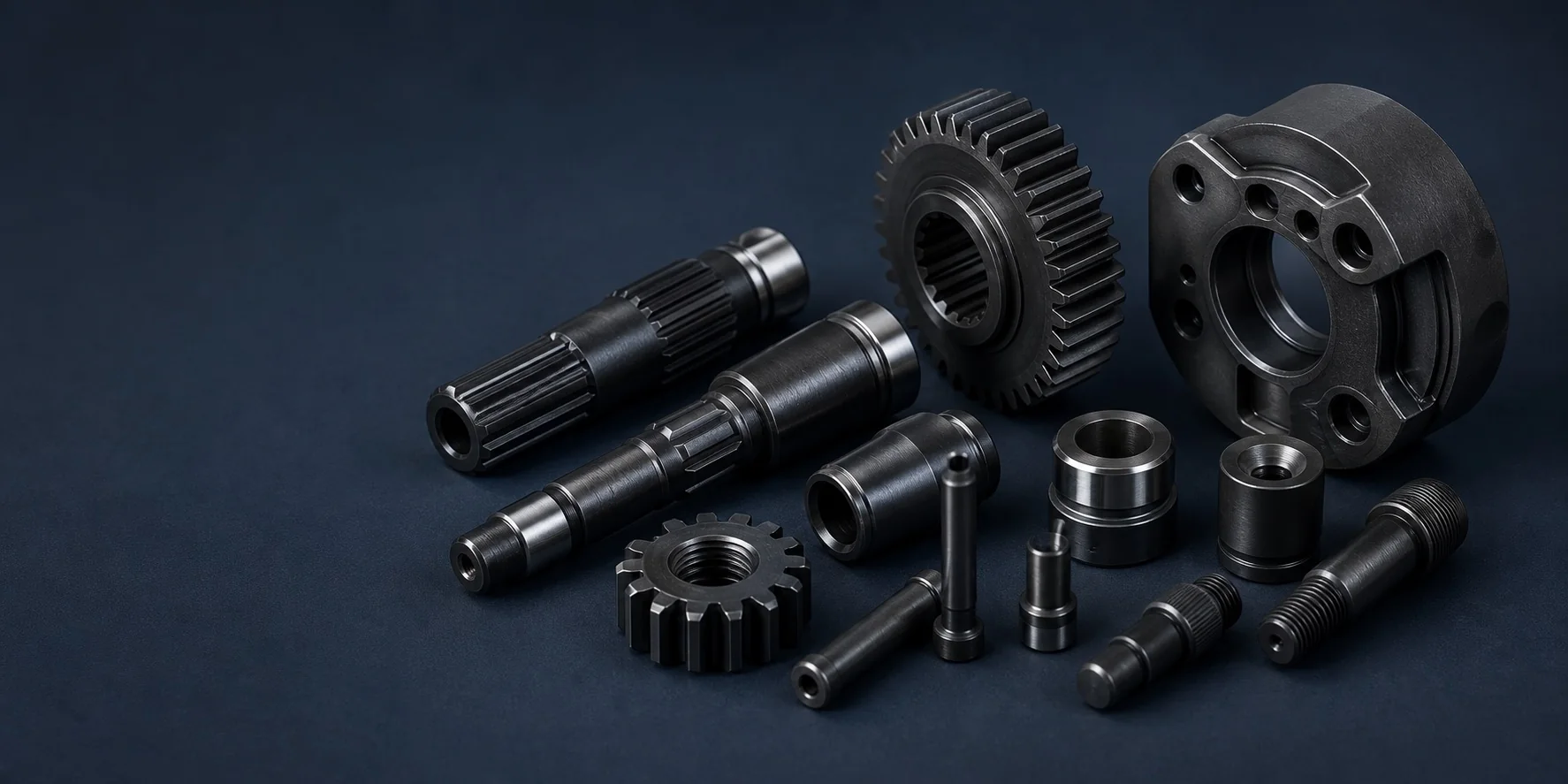
Engineered strength, hardness, and wear performance
Heat Treatment & QPQ
Controlled thermal and thermochemical routes for precision steel parts—from annealing and hardening to case treatment and QPQ ferritic nitrocarburizing.
Project guide
What must be defined before heat treatment or QPQ?
Thermal and diffusion routes need a material and property target. The condition of the starting part and the acceptable dimensional change should be reviewed together.
Properties below the surface
Choose the Route from the Required Part Performance
Heat treatment changes a metal's microstructure through controlled heating, holding, cooling, and—where required—tempering. The selected alloy, starting condition, section size, furnace atmosphere, quench severity, and subsequent operations all influence the result.
QPQ is different from ordinary black coating. It is a ferritic nitrocarburizing sequence with a polish and post-oxidation stage, used on suitable ferrous alloys to create a hard, wear-resistant surface with a dark appearance and low process distortion.
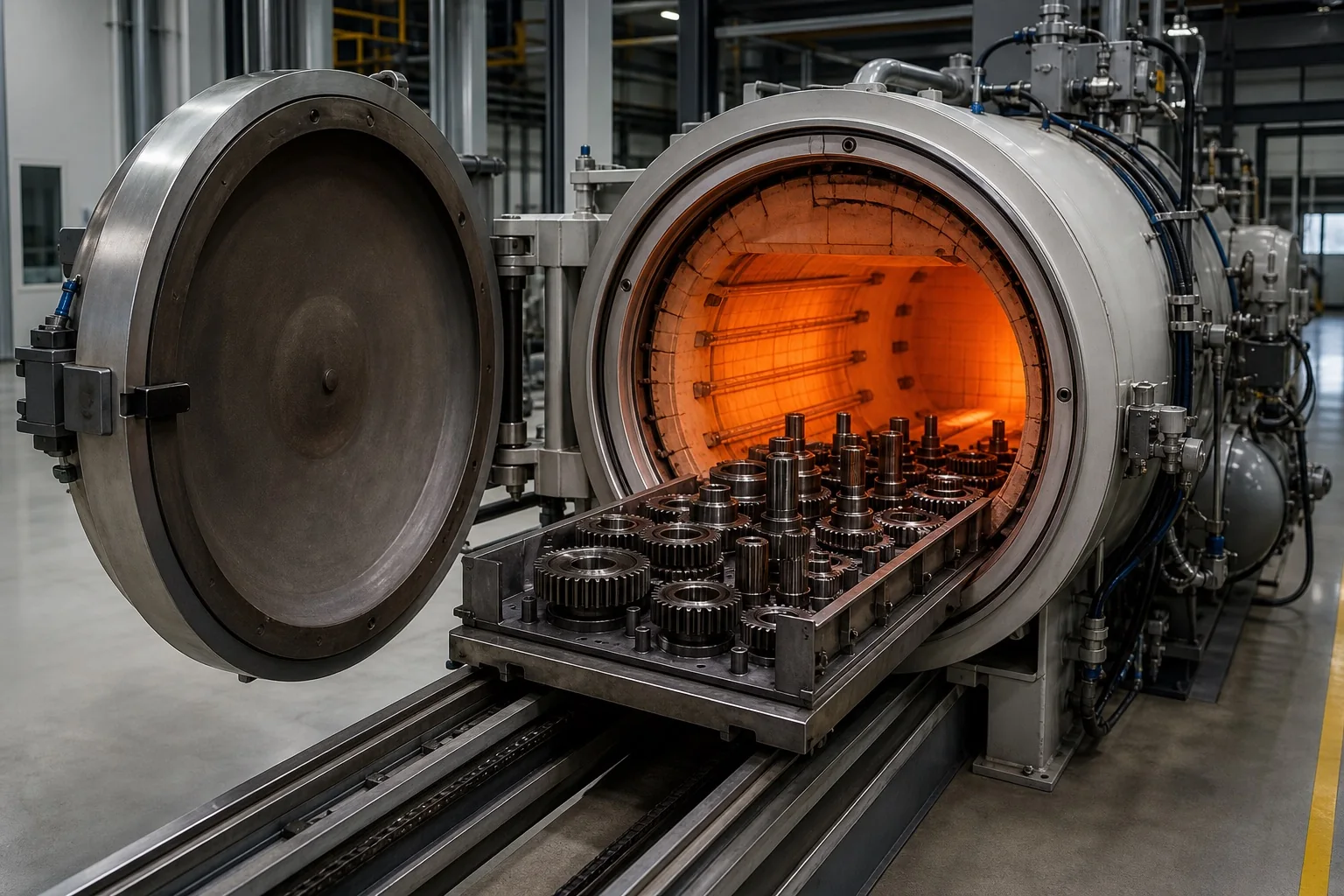
Case-hardening and nitrocarburizing routes protect working surfaces while preserving useful core properties.
A suitable diffusion treatment and controlled residual stress state can improve performance under cyclic loading.
Material, geometry, fixturing, process temperature, quench, and finishing stock are reviewed to manage distortion.
Treatment routes
Four Different Ways to Engineer the Result
The process name alone is not a specification. Alloy response, hardness profile, distortion risk, and service conditions determine the route.
Annealing & Normalizing
Used to soften material, refine or homogenize structure, reduce residual stress, and prepare suitable steels for machining or later treatment.
Hardening & Tempering
Austenitize and quench to develop hardness, then temper to reduce brittleness and achieve the required hardness-to-toughness balance.
Case & Local Hardening
Carburizing, carbonitriding, nitriding, and induction hardening can create a hard working surface while retaining a tougher core or selected untreated areas.
Ferritic Nitrocarburizing / QPQ
A lower-temperature diffusion treatment for suitable ferrous materials, followed in QPQ by polish and re-oxidation to refine tribological and corrosion behavior.
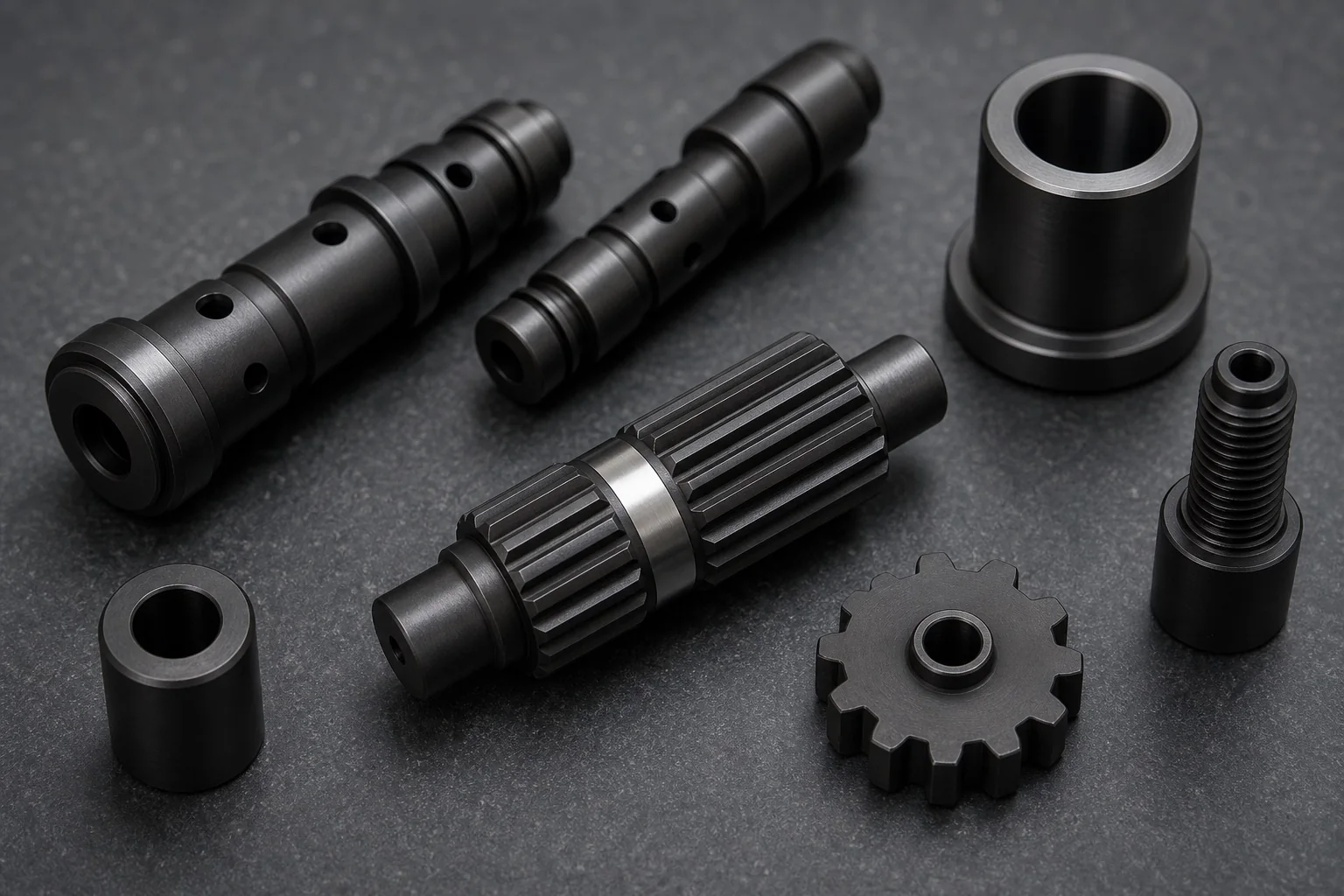
Quench · Polish · Quench
QPQ Builds a Functional Surface—not a Layer of Paint
Salt-bath ferritic nitrocarburizing introduces nitrogen and carbon into the surface while the steel remains in the ferritic range. A controlled polish then reduces surface roughness, and a second oxidizing stage restores the dark oxide-rich outer surface.
- Useful for sliding, anti-scuffing, wear, and fatigue-sensitive steel components.
- Lower treatment temperature can limit distortion compared with austenitic hardening routes.
- The black appearance is process-dependent and should still have agreed cosmetic limits.
- Material grade, prior hardness, surface finish, and post-treatment stock must be reviewed first.
Verification plan
Inspect the Property the Drawing Actually Requires
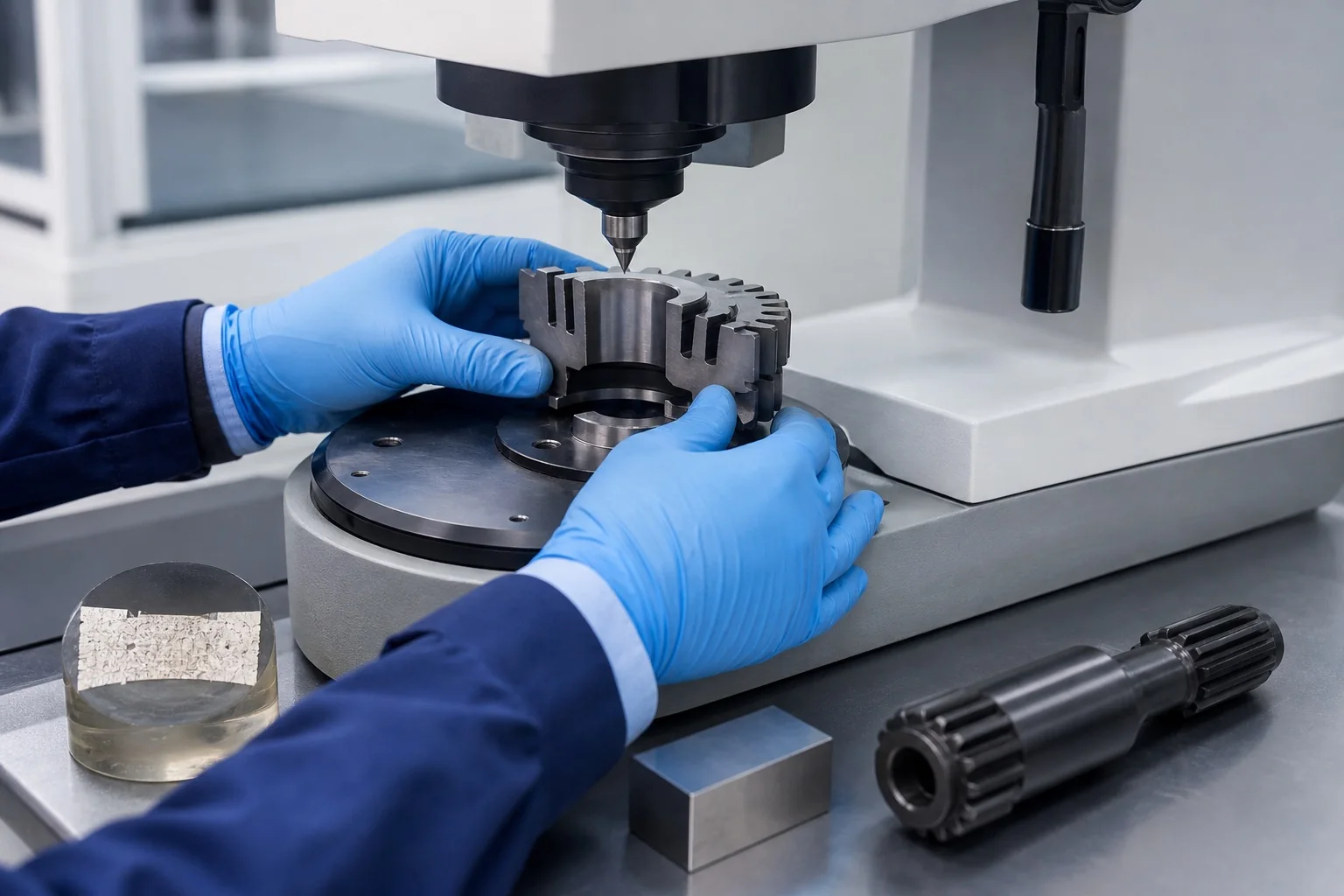
A surface reading alone may not prove the complete result. Depending on the process, inspection can include bulk hardness, surface hardness, effective or total case depth, microhardness traverse, compound-layer evaluation, microstructure, distortion, and visual or corrosion requirements.
Test method, load, location, sampling frequency, acceptance range, and whether a sacrificial coupon or sectioned production part is required should be agreed before processing.
Process comparison
Through Hardening, Case Treatment, QPQ, or Black Oxide?
These routes solve different problems. The right choice starts with loading, wear mode, environment, dimensional tolerance, and compatible alloy—not color alone.
| Route | Primary effect | Typical fit |
|---|---|---|
| Harden & temper | Changes the bulk microstructure and properties through the section when the alloy and geometry permit. | Shafts, tools, fasteners, and structural parts needing core strength and hardness. |
| Carburize / carbonitride | Produces a carbon-rich hard case after quenching while retaining a tougher lower-carbon core. | Gears, pins, cams, and components requiring a deeper load-bearing case. |
| Nitriding / FNC / QPQ | Creates diffusion and compound layers at lower temperature; QPQ adds polish and post-oxidation. | Wear, scuffing, fatigue, corrosion, or dimensional-stability requirements on compatible steels. |
| Black oxide | Forms a very thin conversion layer on suitable ferrous material, normally sealed or oiled for added protection. | Dark appearance, light-duty corrosion protection, and minimal dimensional change—not a substitute for a hardened case. |
Before production
Six Details to Put on the Drawing
Material Condition
State the exact alloy specification, prior processing, incoming hardness, and any mill or material certification requirement.
Required Properties
Define bulk or surface hardness, acceptable range, test scale and load, plus core requirements where relevant.
Case Definition
Specify effective or total case depth, measurement method, test location, and required compound-layer limits.
Distortion Allowance
Identify straightness, roundness, runout, flatness, and critical fits; provide grinding or honing stock when required.
Protected Areas
Mark threads, sealing faces, weld areas, contact points, or features that require masking, stop-off, or post-treatment finishing.
Inspection & Records
State sampling, coupon needs, metallography, certification, traceability, appearance limits, and applicable specification revision.
Controlled thermal workflow
From Alloy Review to Verified Parts
- 01
Review
Confirm alloy, starting condition, geometry, required properties, distortion limits, masking, and inspection plan.
- 02
Prepare & Fixture
Clean parts, protect selected features, plan load orientation, and use suitable fixtures or test coupons.
- 03
Treat
Control heat, soak, atmosphere and cooling; complete tempering or the QPQ polish and post-oxidation sequence as specified.
- 04
Inspect & Release
Verify hardness, case, dimensions, appearance, and required records before corrosion-protective packing.
Project questions
Heat Treatment & QPQ FAQ
Does QPQ harden the whole part?
No. QPQ is a surface thermochemical treatment. It creates compound and diffusion layers while the part's core properties mainly depend on the alloy and its prior heat-treatment condition.
Is QPQ the same as black oxide?
No. Both can look dark, but QPQ is a ferritic nitrocarburizing sequence designed to change surface performance. Black oxide is a much thinner conversion finish and should not be specified as an equivalent hardened case.
Can stainless steel receive a black finish?
Yes, depending on grade and requirement. Options can include specialized black oxide, nitrocarburizing routes for selected stainless grades, or other coatings. Compatibility, corrosion behavior, dimensions, and color expectations must be reviewed rather than assuming one universal process.
Should final machining happen before or after heat treatment?
It depends on the process and tolerance. Parts are commonly rough-machined before a distortion-producing treatment, then finish-ground or honed afterward. QPQ generally requires the intended surface condition before treatment, with only planned selective polishing afterward.
Ready to review your requirement?
Send the Alloy, Drawing, and Required Properties
We will review treatment route, hardness, case depth, distortion risk, protected features, finish, inspection, and production quantity with your manufacturing project.
Start Your Project