Suitable PTFE-rich systems reduce sliding resistance and support dry-release or anti-stick behavior under defined loads and speeds.
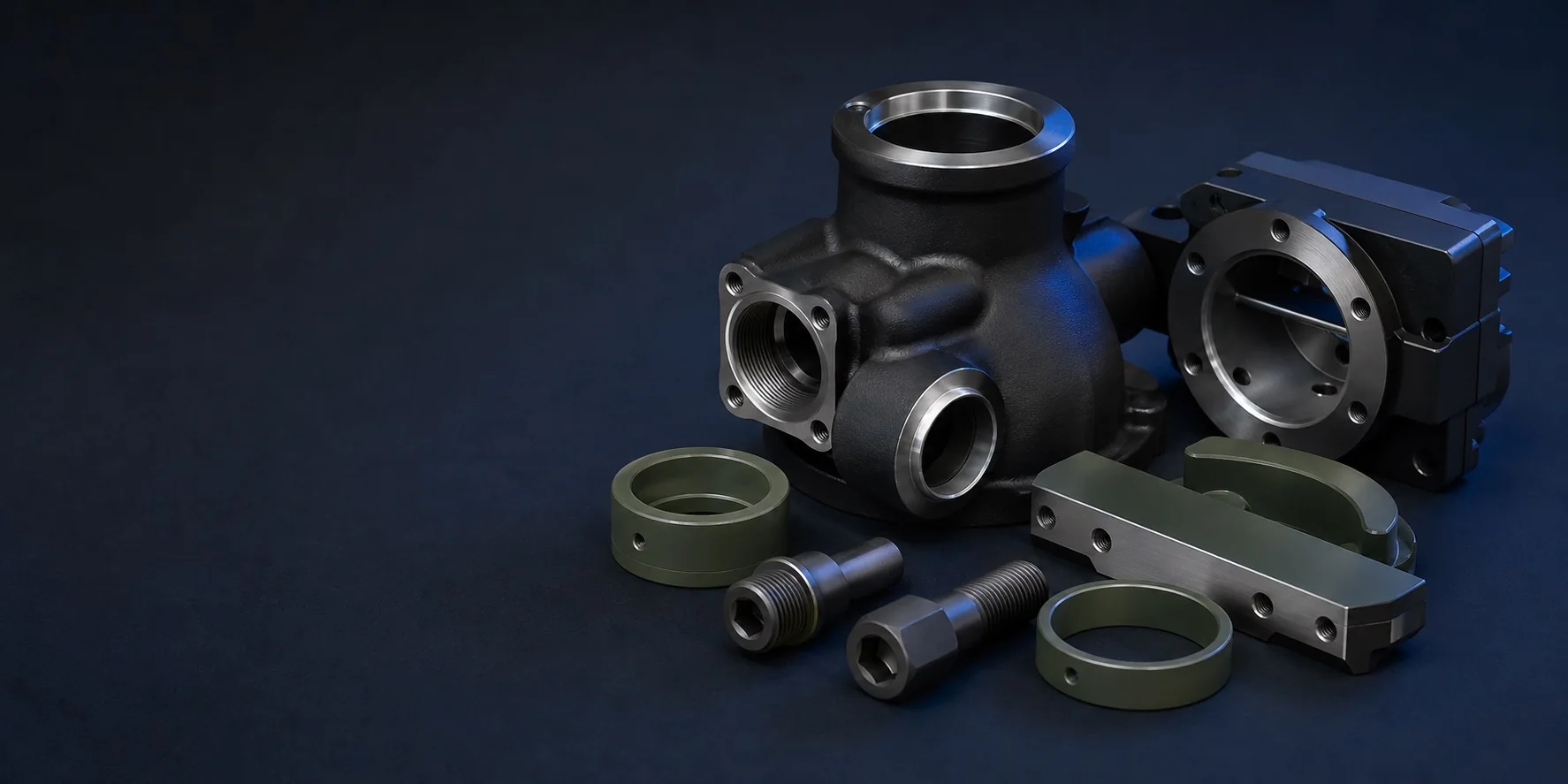
Low-friction fluoropolymer surface systems
PTFE Coating
Non-stick, release, chemical-resistance, and low-friction performance for suitable metal parts—with the coating system, preparation, masking, cure, and inspection matched to the application.
Project guide
Which requirements define a PTFE coating?
Select the coating system against the intended friction, release or chemical-exposure requirement. The substrate and service environment matter as much as the coating name.
A system, not just a resin name
Performance Comes from Substrate Preparation, Coating Chemistry, and Cure
PTFE is one member of the fluoropolymer coating family. Industrial systems may use PTFE, FEP, PFA, ETFE, reinforcing resins, pigments, and dedicated primers in one-coat or multi-coat constructions. Each system balances release, friction, wear, chemical exposure, temperature, thickness, and adhesion differently.
The coating does not correct poor geometry or damaged base material. Cleaning, surface profile, primer compatibility, edge design, masking, spray control, peak metal temperature, and final film verification must work together.
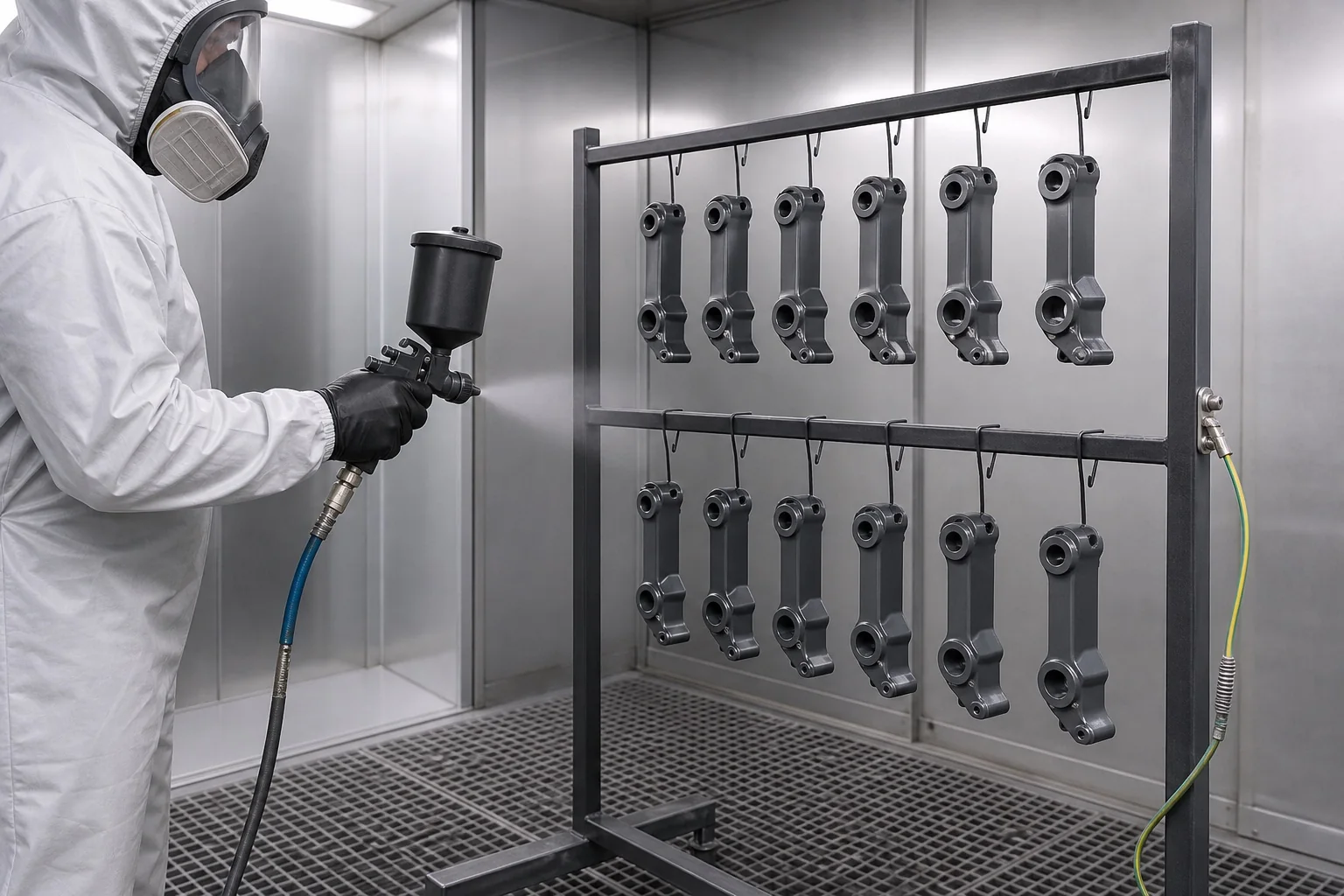
Low surface energy helps many materials release more easily from molds, guides, fixtures, rollers, and processing equipment.
Selected fluoropolymer systems resist many chemicals, but permeation, defects, temperature, and substrate exposure still matter.
Different fluoropolymers retain useful properties across broad temperature ranges when the exact product and substrate are suitable.
Fluoropolymer families
Select the Chemistry for the Real Duty Cycle
No fluoropolymer is best in every category. Service temperature, chemicals, wear mode, porosity, thickness, electrical behavior, color, and compliance determine the system.
PTFE
Known for excellent non-stick performance and very low friction. PTFE dispersion systems often use a primer and may be selected for release, sliding, or high-temperature service.
FEP
A melt-flowing fluoropolymer that can form a smooth, continuous film with strong release and chemical resistance, at a lower typical service temperature than PTFE or PFA.
PFA
Combines melt flow with high chemical and temperature capability, supporting thicker, lower-porosity systems for demanding containment and purity applications.
ETFE & Reinforced Systems
Selected where toughness, abrasion resistance, corrosion protection, or load-bearing wear is prioritized over the lowest possible friction.
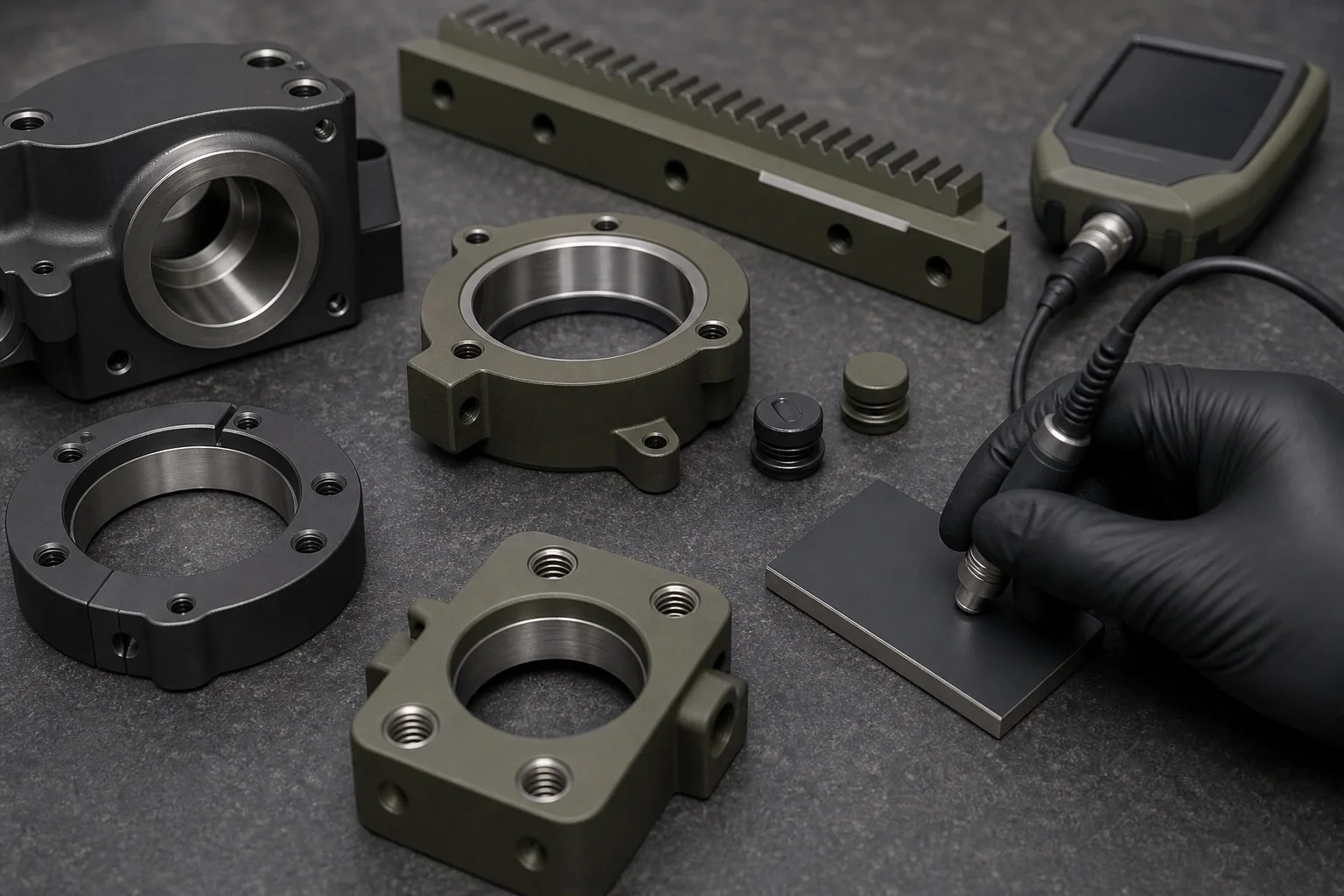
Functional dimensional control
Mask Fits, Threads, Seals, Grounds, and Heat-Sensitive Features
Even a thin coating changes a diameter, thread, clearance, and edge condition. Critical features should be marked on the drawing, with dimensions explicitly applying before or after coating.
- Identify bearing seats, threads, gasket lands, electrical contacts, and precision datums.
- Provide finished-size allowance for every coated mating surface.
- Agree masking transition quality, rack contact location, and acceptable witness marks.
- Define film-thickness measurement locations that represent the functional surface.
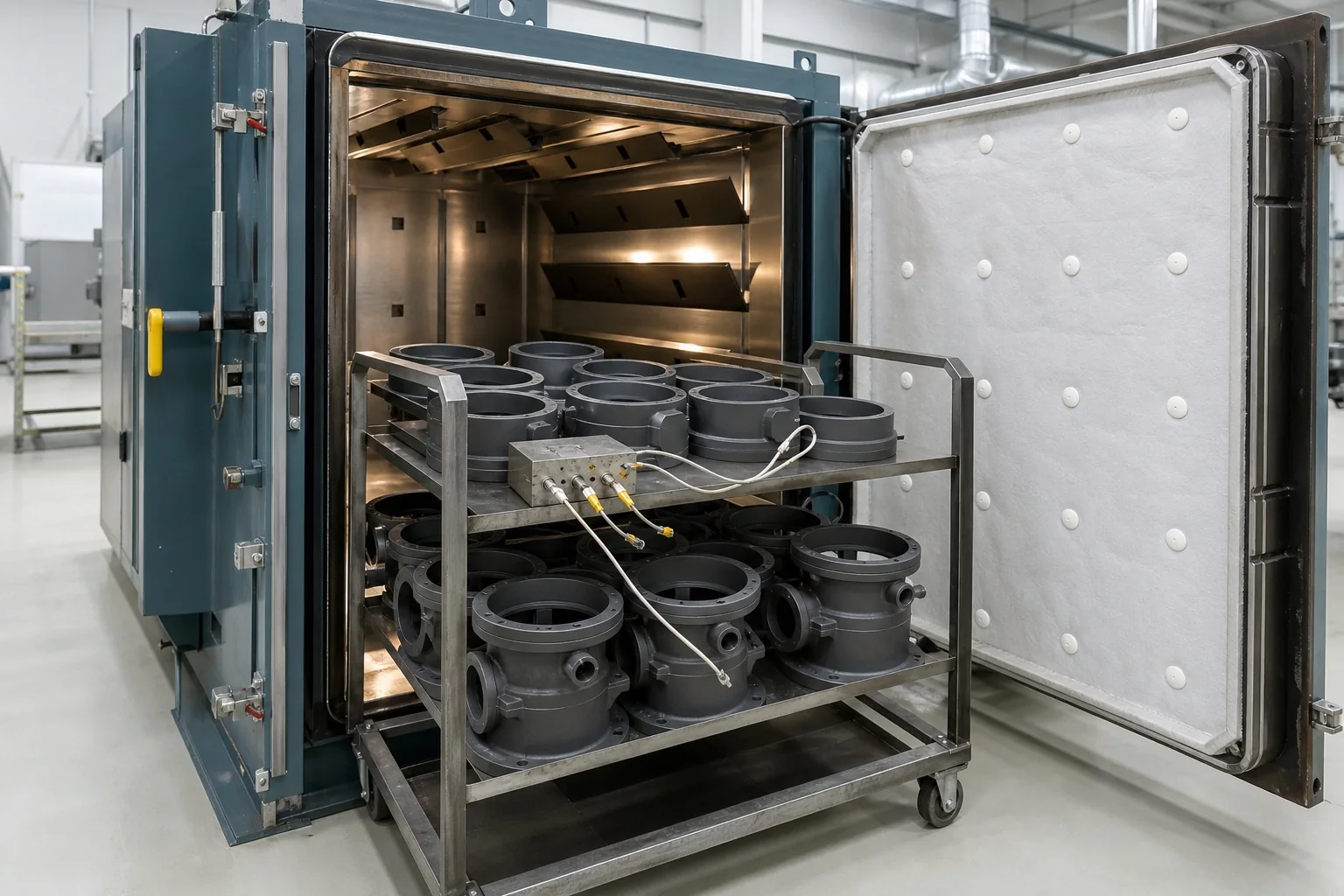
Time at metal temperature
The Oven Setpoint Is Not the Part Temperature
Fluoropolymer systems need a defined thermal cycle to remove carriers, develop adhesion, and fuse or cure the coating. Heavy and light sections reach temperature at different rates, so oven temperature, airflow, load density, part mass, and measured peak metal temperature must be controlled.
The base material, heat treatment, brazing, inserts, seals, and prior coatings must tolerate the complete cycle. Under-cure can reduce adhesion and performance; excessive time or temperature can damage the film or substrate.
System comparison
Choose by Priority—not by Color
Black, gray, green, and other appearances can occur across different formulations. The product data sheet and qualification tests define performance, not visual similarity.
| Primary requirement | Likely direction | Confirm before release |
|---|---|---|
| Lowest friction / release | PTFE-rich or dedicated non-stick system. | Load, speed, mating material, lubrication, wear life, and allowed film transfer. |
| Chemical barrier | Melt-flowing PFA, FEP, ETFE, or qualified multi-coat system. | Chemical concentration, temperature, immersion time, permeability, holidays, and substrate. |
| Abrasion or load | Reinforced PTFE or tougher fluoropolymer composite. | Contact pressure, particle contamination, cycle count, surface preparation, and acceptable friction. |
| Regulated contact | Application-specific certified coating system. | Exact product, color, cure, migration limits, declaration scope, and current supporting documents. |
Before production
Six Details to Put on the Drawing
Coating System
Name the approved specification, product family, primer and topcoat construction, color, and relevant revision.
Service Conditions
Provide temperature, chemical exposure, load, speed, mating surface, cleaning method, cycles, and environment.
Film Thickness
Define the acceptable range, measurement method, and exact locations; include allowance in coated dimensions.
Masking
Mark threads, fits, grounds, seals, sharp edges, heat-sensitive inserts, and all surfaces that must remain coating-free.
Appearance & Defects
State limits for color, gloss, texture, pinholes, inclusions, edge coverage, rack marks, and masking transitions.
Tests & Compliance
Specify adhesion, cure, thickness, holiday, release, wear, chemical, electrical, or regulatory documentation required.
Controlled coating workflow
From Surface Preparation to Protected Delivery
- 01
Review & Prepare
Confirm substrate, duty cycle, coating system, dimensions and tests; remove contamination and create the specified surface profile.
- 02
Mask & Prime
Protect functional features, establish rack points, and apply the qualified primer when the system requires one.
- 03
Apply & Cure
Build controlled wet or powder layers and complete each flash, bake, and peak-metal-temperature stage.
- 04
Inspect & Pack
Verify thickness, adhesion, cure, coverage, appearance, dimensions, and specified tests before non-marring packing.
Project questions
PTFE Coating FAQ
Is Teflon the same as PTFE?
PTFE is a fluoropolymer chemistry. Teflon™ is a Chemours trademark used for specific fluoropolymer products and coating systems. A generic PTFE coating should not be described as Teflon™ unless the specified branded system is actually used.
Is every PTFE coating food-contact compliant?
No. Compliance belongs to the exact coating formulation, color, primer, cure schedule, substrate, application, and regulatory conditions. Current supplier documentation must support the intended use.
Can PTFE coating replace lubrication?
Sometimes it can reduce lubrication demand, but not automatically. Load, speed, temperature, mating material, contamination, wear life, and acceptable transfer film determine whether dry running is suitable.
Can the coating cover internal passages?
Coverage depends on access, line of sight, electrostatics, drainage, part orientation, and the coating method. Deep blind holes, narrow passages, and sharp recesses need review and may require masking or a different process.
Ready to review the duty cycle?
Send the Part, Environment, and Coating Requirement
We will review substrate preparation, fluoropolymer system, masking, film build, cure, dimensional allowance, inspection, and compliance documentation.
Start Your Project