Models, drawings, revisions, and requirements aligned before production.
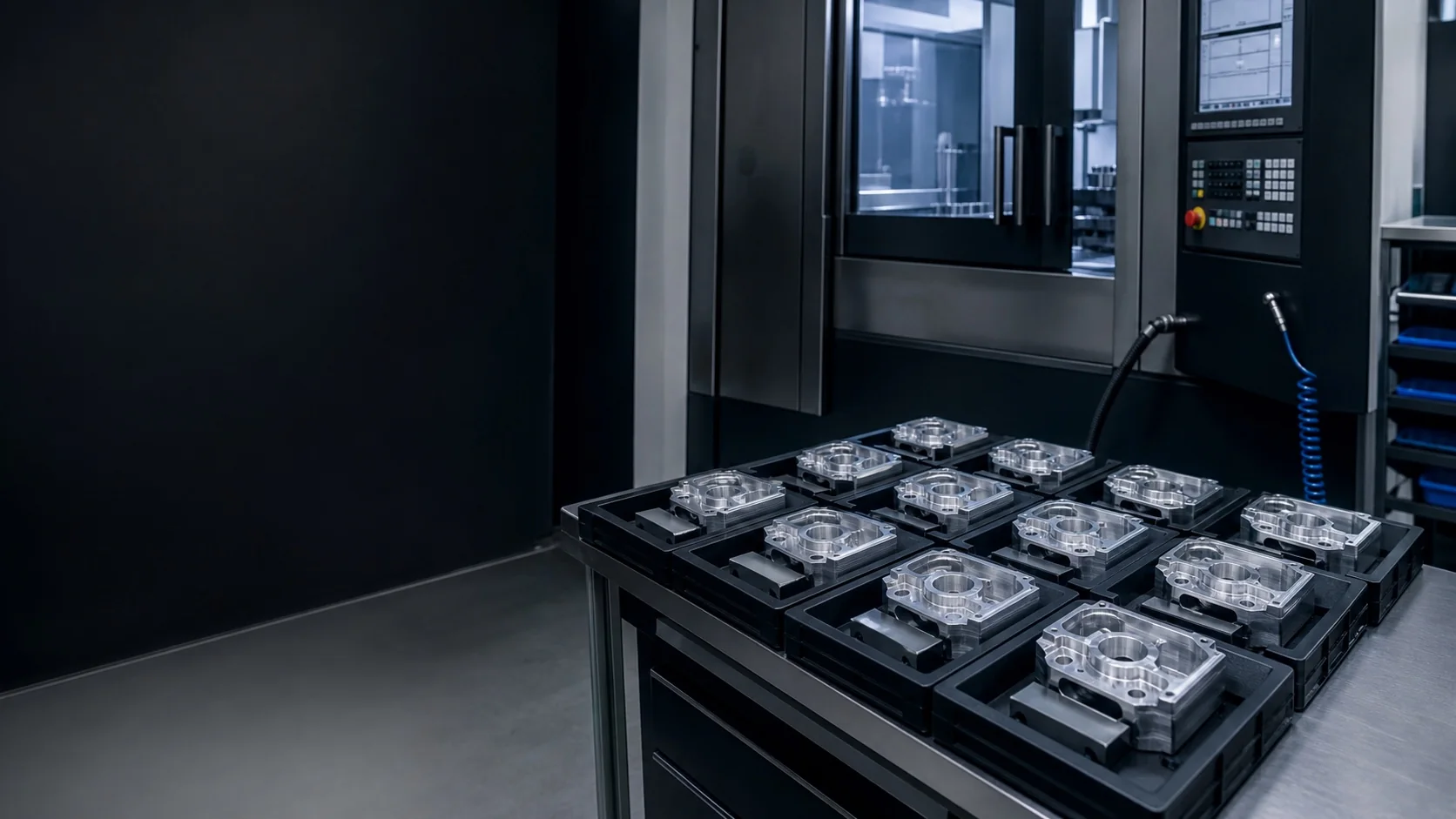
Low-volume manufacturing
Low-Volume Manufacturing for First Batches & Repeat Orders
Controlled small-batch manufacturing for bridge production, repeat orders, product variants, replacement parts, and programs that need production intent without mass-production scale.
Project guide
What changes between the first batch and a repeat order?
Establish the released design and approval records for the first batch. For a repeat order, identify changes and confirm whether the approved route and acceptance criteria still apply.
Decision guide
Separate first-batch approval from repeat-order release
The first batch establishes an agreed reference; a repeat order checks whether that reference still applies. Quantity alone does not define the route. Review drawing revision, material, process, finish and acceptance requirements before each release.
Scroll horizontally to compare all columns.
| Decision | First batch | Repeat order |
|---|---|---|
| Design baseline | Resolve CAD and drawing conflicts; identify the approved revision | Confirm the revision and review every requested change before using retained files |
| Manufacturing route | Discuss workholding, process sequence and first-article scope | Review whether quantity, stock or process changes require renewed approval |
| Acceptance | Agree critical features, sampling, cosmetic criteria and required records | Apply the agreed criteria; identify any changed inspection or traceability requirement |
| Reference and handover | Identify the approved sample or records, when required, and the release responsibility | Reference the approved baseline; clarify how changes and nonconforming results will be handled |
Make the approved route practical to repeat
- Discuss practical material grades, stock forms, fasteners, finishes and gauges to reduce avoidable changes between batches.
- Provide clamping, assembly and measurement access. Apply demanding limits to the fits and relationships that control function.
An accepted prototype is not automatically approval for a production batch. A retained sample also does not replace the released drawing. State what the sample represents and which written requirements control acceptance.
Guide updated . Confirm the manufacturing and inspection scope for your actual order.
Your first order
Plan Your First Batch
Use the first order to establish what will be made, how it will be checked and what must be approved before repeat production.
- 01
Define the first batch
Separate the quantity needed for evaluation from expected repeat quantities. Ask for the proposed minimum batch and any setup or tooling costs for this part.
- 02
Agree the approval point
State whether you need a sample, dimensional records or a fit check before the remaining batch proceeds. Agree who approves and what evidence is required.
- 03
Confirm the quotation
Align the part revision, material, finish, inspection, packaging and delivery scope. Confirm price, payment milestones and a schedule in writing.
- 04
Review before repeating
Record the approved revision and any agreed changes. A successful sample does not automatically approve a changed material, process or next batch.
A first order starts with a clear scope. Batch size, sample arrangements, lead time and payment terms depend on the reviewed part and quotation.
Discuss Your First BatchFixtures and setups planned around consistent batch execution.
Machining, fabrication, finishing, inspection, and assembly connected.
First article, in-process checks, and final records defined by risk.
The stage between prototype and scale
Production Intent Without Mass-Production Commitment
Low-volume manufacturing is not a single process or a fixed quantity. It is a controlled way to produce end-use or production-intent parts when demand, design maturity, customization, inventory strategy, or tooling economics do not support mass production.
The focus shifts from proving that one part can be made to proving that the same released requirements can be repeated across a batch, through finishing, inspection, packaging, and future orders.
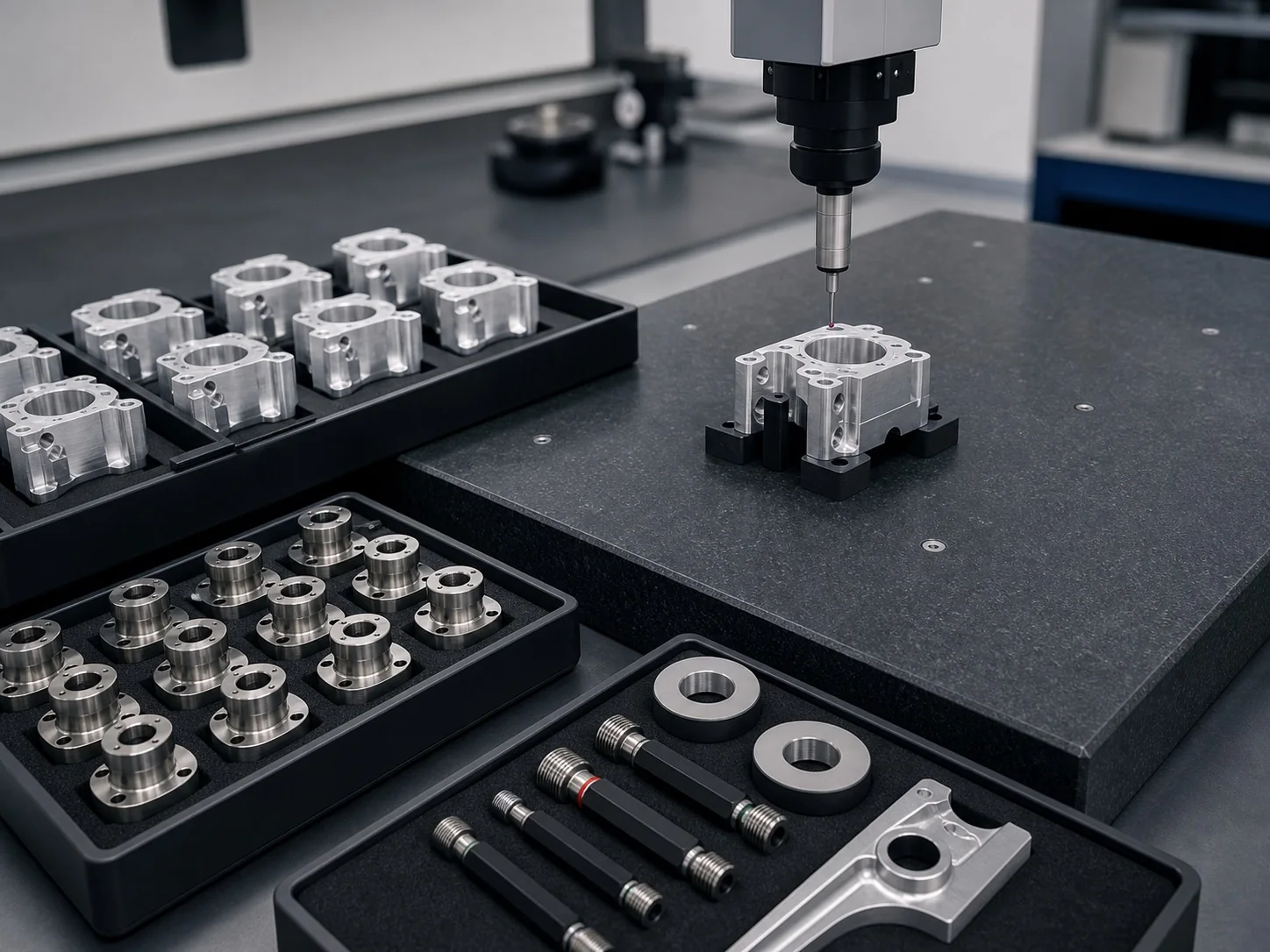
Where low volume fits
A Flexible Route for Several Production Needs
The correct process plan depends on demand, design stability, material, geometry, finishing, documentation, and whether the program is expected to repeat or scale.
01 / BRIDGE
Bridge Production
Supply production-intent parts while the market, assembly process, supply chain, or future high-volume tooling is still being validated.
02 / ON-DEMAND
Repeat Small Batches
Release parts in controlled quantities to align inventory with actual demand and preserve a repeatable manufacturing route.
03 / HIGH-MIX
Variants & Replacement Parts
Support product families, engineering changes, customized configurations, fixtures, spares, and end-of-life component needs.
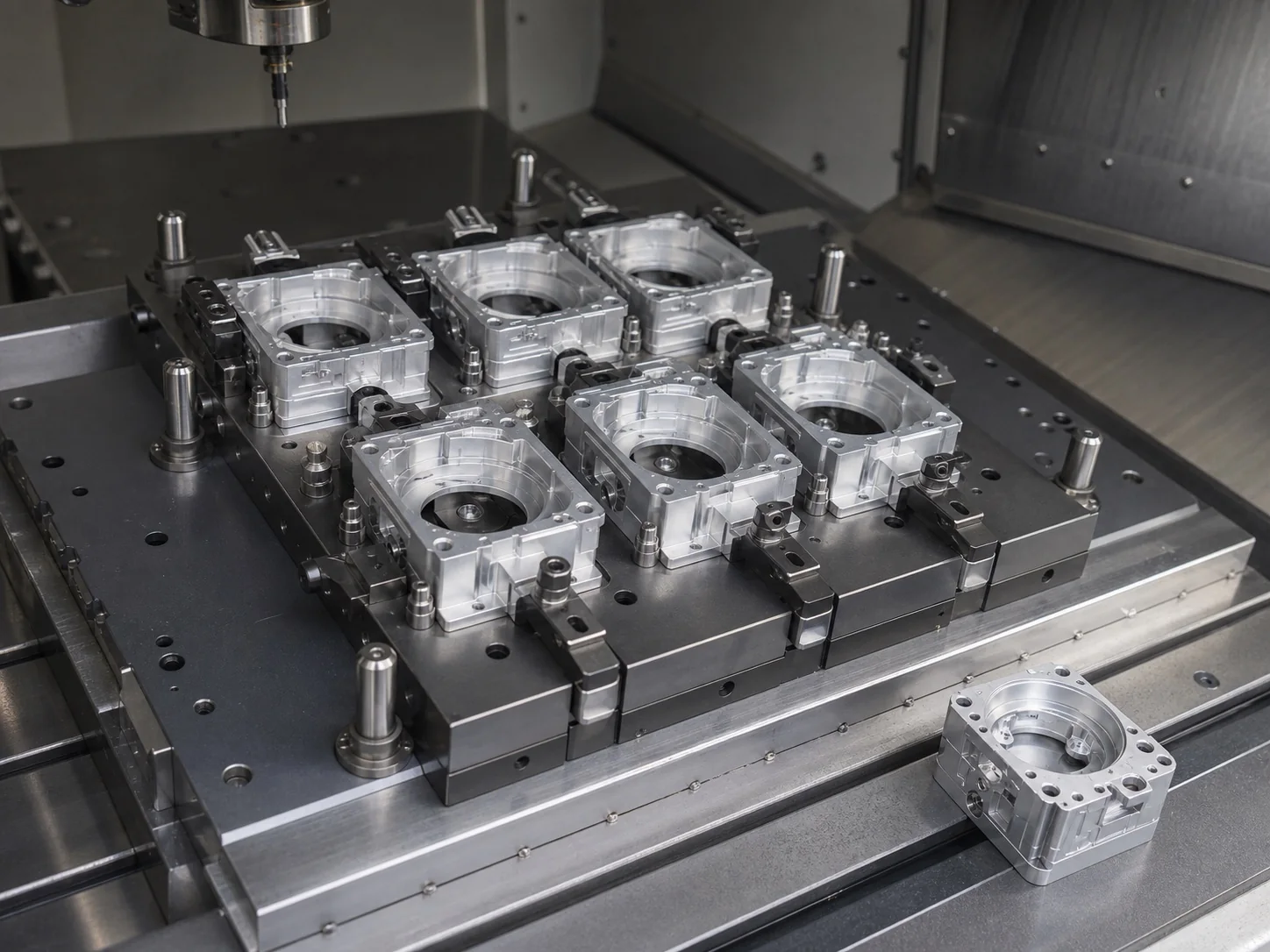
Manufacturing route
Use the Process Mix the Program Needs
The lowest-risk route may combine several services. Process selection should follow geometry, material, quantity, finish, assembly, inspection, and future repeatability—not a single preferred machine.
Primary Processes
- CNC milling and turning
- Sheet metal cutting and forming
- EDM for selected difficult features
- Project-specific additive support
- Assembly and integration
Supporting Steps
- Deburring and cleaning
- Surface finishing
- Heat treatment when required
- Dimensional and visual inspection
- Protective packaging and batch separation
Controlled workflow
From Released Design to Repeat Order
- 01
Review
Confirm revision, demand, material, finishing, critical requirements, documentation, and delivery priorities.
- 02
Qualify
Finalize DFM, route, fixtures, programs, first-article scope, inspection plan, and packaging method.
- 03
Produce
Release the batch through controlled setups, in-process checks, post-processing, and final inspection.
- 04
Repeat
Retain the approved manufacturing baseline and review any material, quantity, revision, or requirement changes before reorder.

Quality by agreed scope
Inspection Should Match Batch Risk
The quality plan can combine first-article confirmation, in-process checks, final sampling or defined full inspection, visual criteria, traceability, and requested documentation.
- Released drawing and revision review
- First-article confirmation when required
- Critical-feature and process checkpoints
- Inspection records by agreed scope
Start with the program inputs
Plan Your Low-Volume Production Batch
Share the released 3D model and drawing, expected batch quantity, forecast or repeat frequency, material, finish, assembly scope, critical requirements, documentation needs, and target timing.
Discuss Your Production Plan