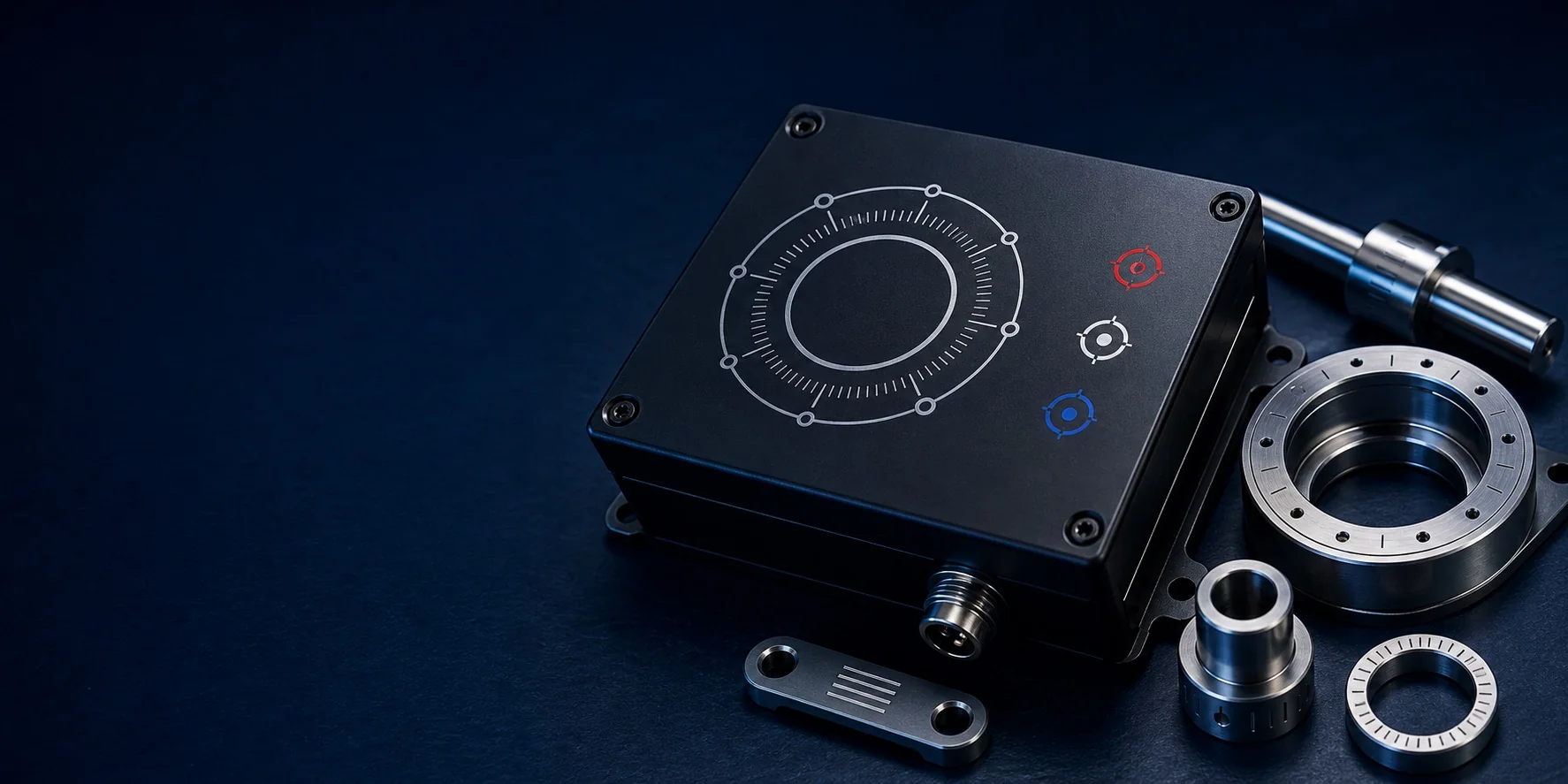
Small symbols, scale ticks, identifiers, and data-matrix-style patterns can be produced precisely.
Permanent marks or custom-color graphics
Laser Marking &
Silk Screen Printing
Select the right marking method for traceability, control legends, product identification, logos, symbols, scales, and decorative graphics on precision metal and plastic parts.
Project guide
How do you specify a mark or printed graphic?
The artwork, substrate and intended durability determine the marking brief. Position and legibility need a shared reference before a marking process is selected.
Start with the end use
Two Processes, Different Strengths
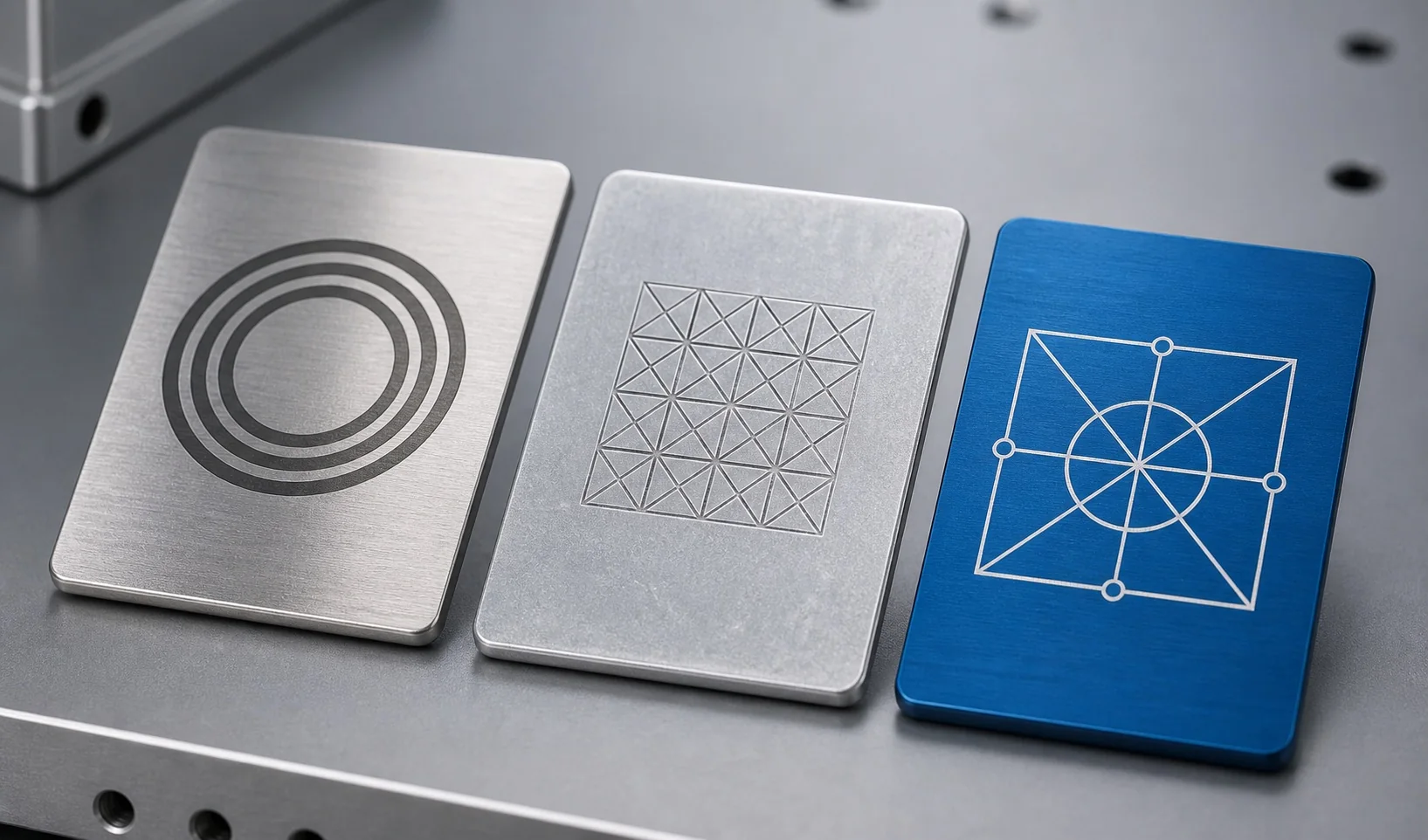
Laser marking changes or removes a controlled area of the surface with focused light. Depending on the material and parameters, the result may be an annealed color change, a shallow engraving, or the removal of a coating to expose a contrasting layer beneath it.
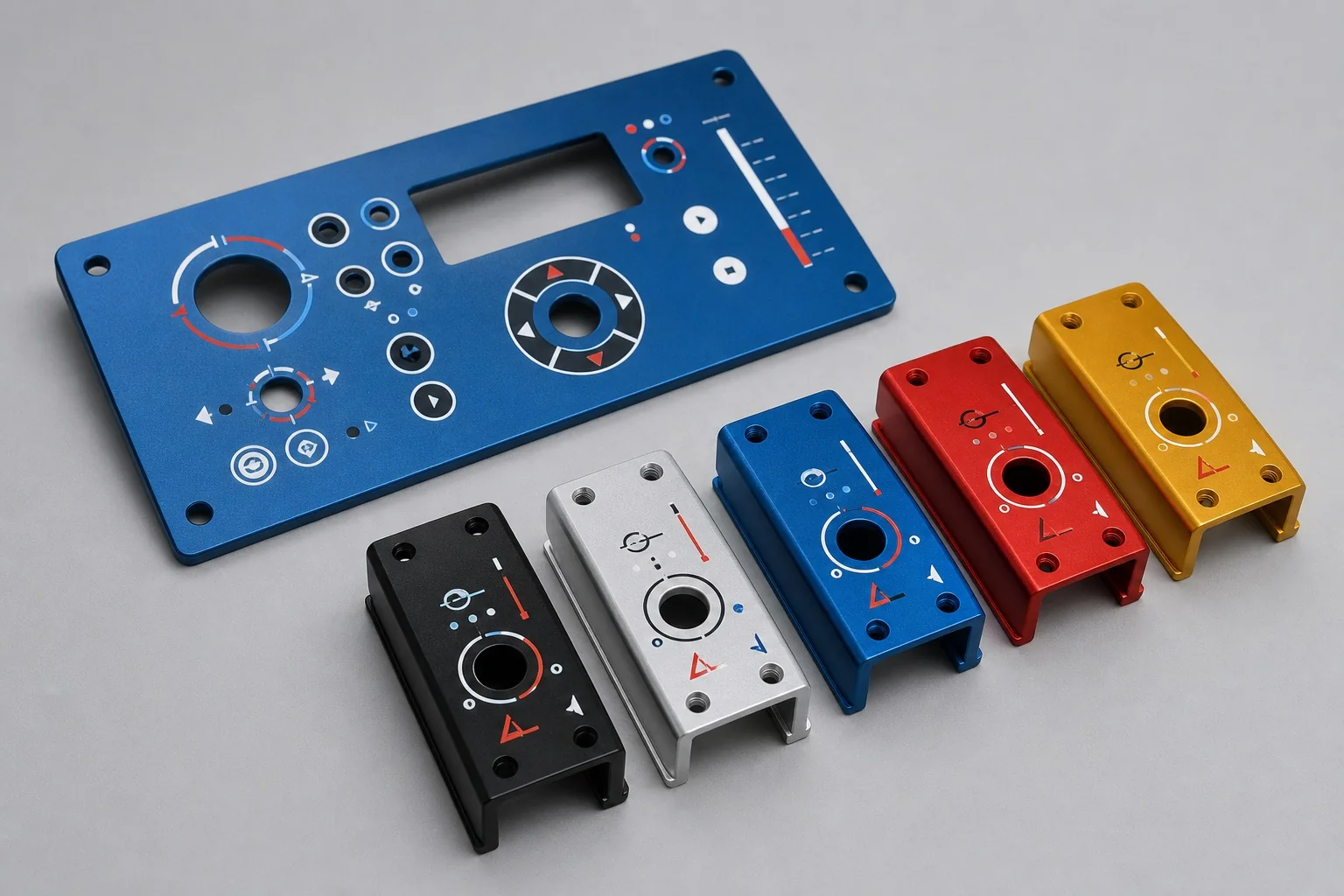
Silk screen printing transfers ink through a patterned mesh onto the component. It is the stronger choice when a design needs a specified color, multiple colors, broad opaque graphics, or a brand treatment that cannot be produced from the material itself.
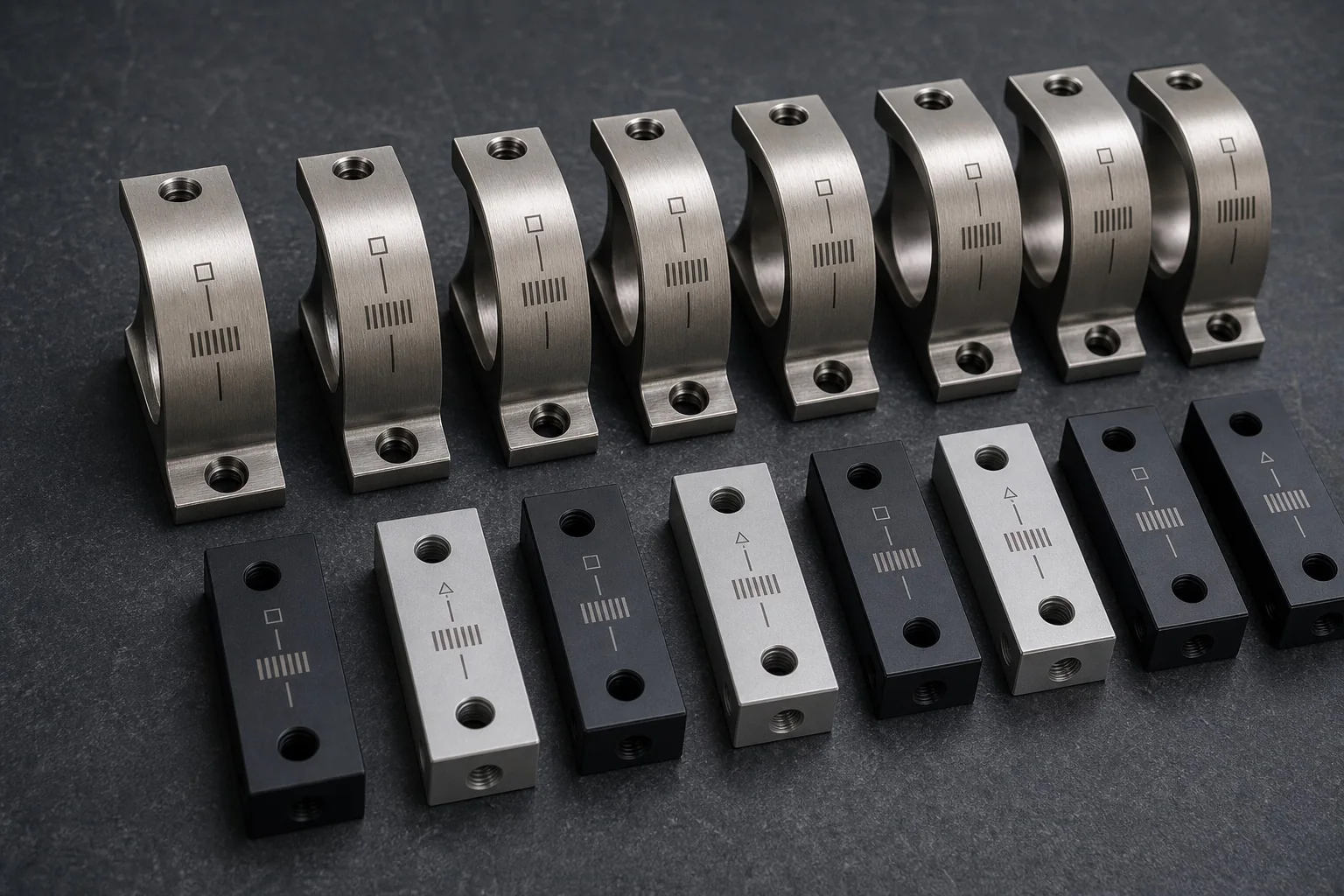
Laser marks are part of the surface and can resist wear better than labels or ordinary ink.
Screen printing supports defined ink colors and opaque graphics on many finished parts.
Marking can follow anodizing, coating, plating, polishing, or other approved surface routes.
Marking methods
How the Surface Creates Contrast
“Laser marking” is a family of processes. The correct method depends on the substrate, existing finish, desired contrast, permitted depth, and service environment.
Annealing Mark
Controlled heating changes the surface color of suitable ferrous metals without intentional material removal. It is selected when a smooth mark and minimal surface disturbance are important.
Laser Engraving
Higher energy removes material to create a shallow recessed mark. Engraving is useful for permanent identifiers and graphics that need more mechanical durability than a surface-only color change.
Coating Ablation
The laser selectively removes anodize, paint, or another top layer so the underlying metal or contrasting layer becomes visible. This is common on panels, dials, and backlit controls.
Silk Screen Printing
Ink is transferred through a stencil-bearing mesh, then cured using the route specified for the substrate and ink system. It supports broad, crisp graphics and custom colors.
Laser marking
Permanent Detail Without Ink or a Screen
Laser marking is non-contact and well suited to changing data such as serial numbers, part identifiers, revision codes, and traceability marks. The artwork can change from part to part without remaking a physical screen.
- Material and finish determine the usable laser source and achievable contrast.
- Annealing, engraving, and ablation do not produce the same depth or surface condition.
- Very small features need minimum line-width and legibility trials on the actual finish.
- Appearance-critical or regulated marks should be approved from a production-equivalent sample.
Silk screen printing
Specified Color and Strong Visual Contrast
Screen printing is useful when the mark must be white, red, blue, yellow, green, black, or another controlled ink color rather than the natural contrast available from laser interaction. Multiple colors are possible, but each color needs its own screen and registration step.
Adhesion depends on the ink chemistry, surface energy, cleanliness, pretreatment, cure, and the existing finish. Parts with deep recesses, sharp steps, or strongly curved faces may need a different printing or marking route.
Selection guide
Laser or Screen Print?
Choose from the functional requirement rather than appearance alone. A sample can be useful when both methods appear suitable.
| Requirement | Laser marking | Screen printing |
|---|---|---|
| Color | Usually derived from material reaction or exposed substrate. | Custom ink colors, including opaque light colors on dark finishes. |
| Durability | Typically strongest for abrasion and permanent traceability. | Depends on ink, preparation, cure, coating, and service conditions. |
| Variable data | Excellent for unique serials, codes, and changing identifiers. | Best for repeating artwork; new content normally needs a new screen. |
| Surface effect | May be smooth, color-changed, recessed, or coating-removed. | Applied ink film sits on the surface. |
| Best fit | Fine detail, permanent IDs, small batches, changing data. | Brand colors, broad graphics, high-opacity legends, repeated designs. |
Artwork and drawing preparation
Six Details to Define Before Production
Vector Artwork
Supply editable vector paths for logos, legends, symbols, scales, and boundary geometry.
Position & Datum
Dimension the mark from functional datums and identify orientation on the 2D drawing.
Material & Finish
State the substrate plus anodize, paint, plating, texture, or polish beneath the mark.
Color & Contrast
Define the ink reference or target contrast and provide an approved sample when critical.
Minimum Features
Confirm minimum line width, text height, spacing, and code readability on the real surface.
Performance Test
Specify any adhesion, abrasion, chemical, UV, sterilization, or cleaning requirement.
Controlled marking workflow
From Artwork Review to Final Inspection
-
01
Review
Confirm artwork, substrate, finish, position, color, quantity, and performance requirements.
-
02
Sample
Establish laser parameters or ink, screen, pretreatment, and cure on a representative surface.
-
03
Mark or Print
Use controlled fixtures and registered artwork to maintain orientation and repeatability.
-
04
Inspect & Protect
Check appearance, location, legibility, and specified tests before protective packaging.
Project questions
Marking & Printing FAQ
Is every laser mark recessed?
No. Engraving removes material, but annealing changes color without intentional removal, and coating ablation mainly removes the finish above the substrate.
Can screen printing go over anodizing or powder coating?
Often yes, provided the ink, pretreatment, and cure are compatible with the actual finish. Adhesion should be proven on a production-equivalent sample.
Which method is better for serial numbers?
Laser marking is normally more efficient because each mark can change digitally without producing a new screen, while also providing strong durability.
What should I send for a quote?
Send the part model, a drawing locating the mark, editable vector artwork, substrate and finish details, color references, quantity, and any durability or inspection requirement.
Ready to review your artwork?
Send the Part, Finish, and Marking File
We will review contrast, durability, placement, line detail, color, and production quantity before confirming the marking route.
Start Your Project